Introduction
In today’s automotive industry, large workshops, multi-location garages, and dealership groups still rely heavily on on-premise servers to manage their operations. These legacy systems, once considered the pinnacle of security and control, are increasingly coming under threat from a rapidly evolving cyber risk landscape. More importantly, these threats are not limited to cyberattacks alone—physical, human, and operational risks now make on-premise servers a significant liability for organizations. As a result, many forward-thinking businesses are transitioning to cloud-based workshop management software, which offers a safer, more scalable, and cost-effective alternative. In this blog, we’ll explore the debate of on premise vs cloud workshop software security, highlight the hidden dangers of on-premise solutions, and demonstrate why Moiboo’s cloud platform is the modern answer for the automotive sector.
What Are On-Premise Servers?
On-premise servers refer to physical machines and infrastructure hosted within your business premises. Typically, large garages set up these servers in a dedicated room or office, relying on their own IT teams to manage installation, maintenance, and security. However, this local setup means the entire responsibility for data protection, uptime, and disaster recovery falls solely on your shoulders. In addition, on-premise servers offer limited scalability, making it challenging for growing businesses to expand or adapt to new requirements. Ultimately, the limitations of on-premise systems become more pronounced as your organization grows and the threat landscape evolves.
Why Garages Still Use Them
- Habit: Many owners trust what they know.
- Control: Some believe they have more power over their data.
- Customization: Legacy tools might only run onsite.
- Fear: Owners worry about cloud hacks.
- Upfront Cost: Hardware feels like a one-time spend.
Major Security Risks
Hardware fails. Systems go offline. Data gets exposed. Backups get missed. Hackers target weak setups. Staff may forget updates. Power cuts mean downtime. Disasters destroy local servers. Physical theft happens. Malicious insiders steal data. Virus outbreaks spread fast. Compliance gets messy. Recovery is slow and costly.
Major Security Risks of On-Premise Systems
Physical Risks
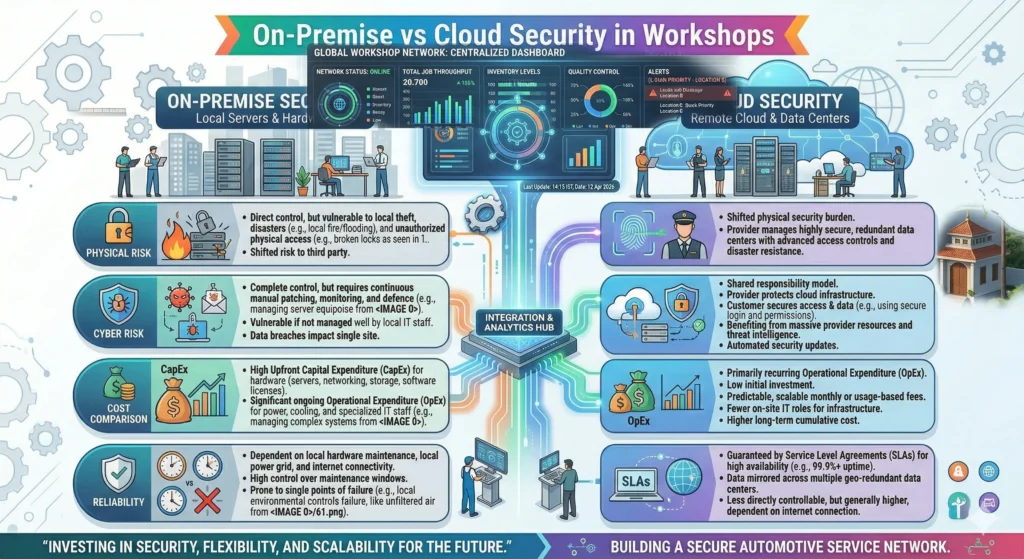
More importantly, the physical presence of your servers exposes them to a unique set of dangers. Theft remains a real concern, especially for garages with multiple locations and varying levels of physical security. In addition, fire, flooding, or other natural disasters can irreversibly damage servers, leading to catastrophic data loss. Hardware failures are another common issue; aging or overworked equipment is prone to breakdowns, which can disrupt operations and compromise critical information.
Cyber Risks
When it comes to cyber threats, on-premise servers face a barrage of risks that are difficult to manage internally. Most notably, many organizations fail to regularly apply security patches, leaving their systems vulnerable to known exploits. Outdated software is another persistent problem, as legacy applications may no longer receive security updates or support. Furthermore, limited monitoring capabilities mean that threats can go undetected for extended periods, allowing attackers to compromise sensitive data with little resistance.
Human Risks
Human error is a leading cause of security breaches in on-premise environments. Misconfiguration of systems—whether through oversight or lack of expertise—can open the door to unauthorized access and data leaks. Insider threats also loom large; employees or contractors with privileged access can intentionally or accidentally cause significant harm. Consequently, relying solely on internal personnel to enforce robust security protocols is a risky proposition.
Hidden Costs of On-Premise Servers
In addition to security vulnerabilities, on-premise servers often incur substantial hidden costs. Regular maintenance—including hardware upgrades, software patches, and troubleshooting—demands significant time and resources from your IT staff. Downtime, whether planned or unplanned, can bring operations to a halt, resulting in lost revenue and frustrated customers. Moreover, IT staffing requirements are higher for on-premise solutions, as you need specialized personnel to handle everything from daily operations to disaster recovery. Therefore, what seems like a cost-effective solution upfront frequently becomes a financial burden over time.
Why Cloud Systems Are Safer
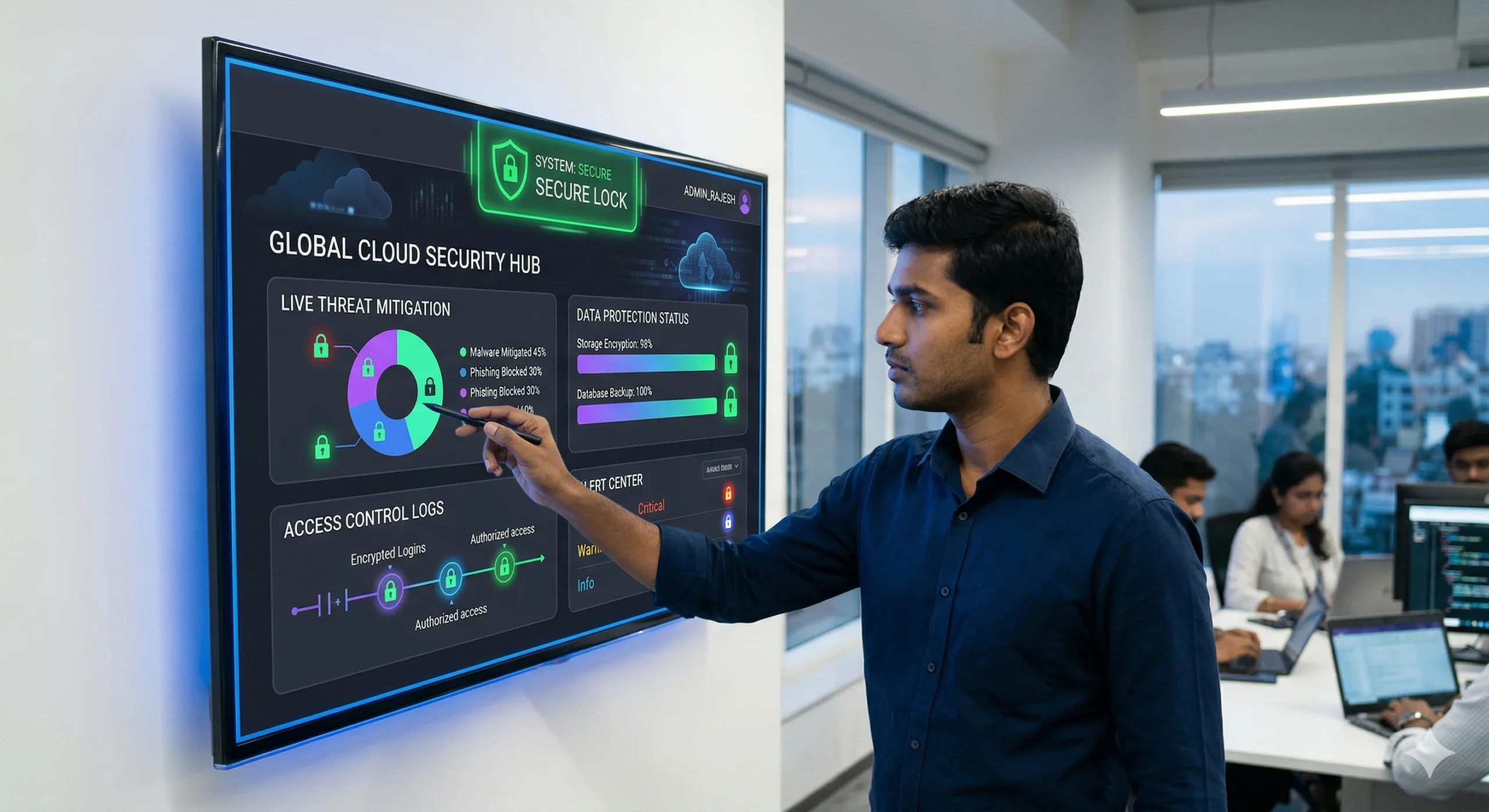
In contrast to on-premise solutions, cloud-based workshop management software offers a host of security advantages. Centralized security controls, managed by dedicated experts, ensure that systems are always protected against the latest threats. Regular updates and patches are applied automatically, reducing the risk of vulnerabilities. More importantly, data is encrypted both in transit and at rest, safeguarding sensitive information from unauthorized access. Furthermore, robust backup systems ensure that your data is recoverable in the event of an incident, minimizing downtime and data loss. Ultimately, the cloud offers a level of security and resilience that most garages cannot achieve with on-premise infrastructure.
How Moiboo Ensures Security
Moiboo is designed from the ground up with security at its core, specifically to address the needs of large automotive businesses. Our cloud infrastructure leverages leading providers with rigorous security measures, including multi-factor authentication and intrusion detection systems. Secure access protocols ensure only authorized personnel can interact with your data, while real-time backups mean your critical business information is always protected. In addition, Moiboo’s systems are compliance-ready, helping you meet regulatory requirements effortlessly. As a result, you can focus on growing your business, knowing your data is in safe hands.
Real-World Scenario: On-Premise vs Cloud Workshop Software Security
Consider two large multi-location garages: Garage A relies on on-premise servers, while Garage B has adopted Moiboo’s cloud-based platform. One morning, Garage A discovers its server room flooded after a burst pipe, leading to days of downtime and thousands of dollars in lost business. In contrast, Garage B experiences no interruption—even if one location faces a local issue, staff can access their data from any device, anywhere. Furthermore, when a new ransomware strain emerges, Garage A’s outdated systems are quickly compromised, while Garage B’s cloud environment is patched within hours and remains unaffected. Ultimately, the choice between on premise vs cloud workshop software security determines which business is prepared for modern risks.
Business Impact
Consequently, the transition to cloud workshop management software like Moiboo delivers tangible business benefits. Reduced risk of data breaches, hardware failure, and human error translates to better operational uptime and customer satisfaction. Moreover, cloud systems scale effortlessly as your business grows, supporting new locations, users, and services without expensive infrastructure upgrades. As a result, you gain a competitive advantage—spending less time on IT headaches and more time delivering value to your customers.
FAQ: On Premise vs Cloud Workshop Software Security
Q1: Why are on-premise servers considered less secure than cloud systems?
On-premise servers put the burden of security and maintenance on your internal team, who may lack the resources or expertise to defend against advanced threats. Cloud providers, in contrast, employ dedicated security experts and advanced technologies to keep your data safe.
Q2: What are the main risks of relying on on-premise servers in a large garage?
Physical risks (theft, fire, hardware failure), cyber risks (outdated software, weak patches, limited monitoring), and human risks (misconfiguration, insider threats) all contribute to the vulnerability of on-premise systems.
Q3: How does cloud workshop software like Moiboo improve security?
Moiboo uses centralized, cloud-based infrastructure with continuous updates, robust encryption, secure access controls, and real-time backups to protect your business from modern threats.
Q4: Are cloud systems more expensive than on-premise solutions?
While the upfront cost of cloud software may seem higher, the hidden costs of on-premise servers—maintenance, downtime, IT staffing—often make them more expensive over time.
Q5: How can I transition from on-premise to cloud securely?
Work with a trusted provider like Moiboo to plan your migration, ensure proper data transfer, and implement best practices for cloud security and compliance.
Conclusion
On-premise servers may have served the automotive industry well in the past, but they are increasingly outdated and risky in the face of modern security threats. In contrast, cloud-based solutions like Moiboo provide the robust protection, scalability, and efficiency that today’s large garages demand. Therefore, when evaluating on premise vs cloud workshop software security, the cloud is not just the safer choice—it’s the only choice for forward-thinking businesses.