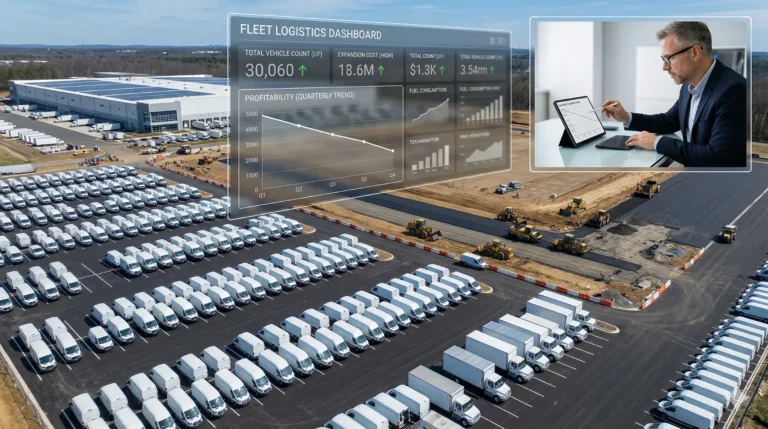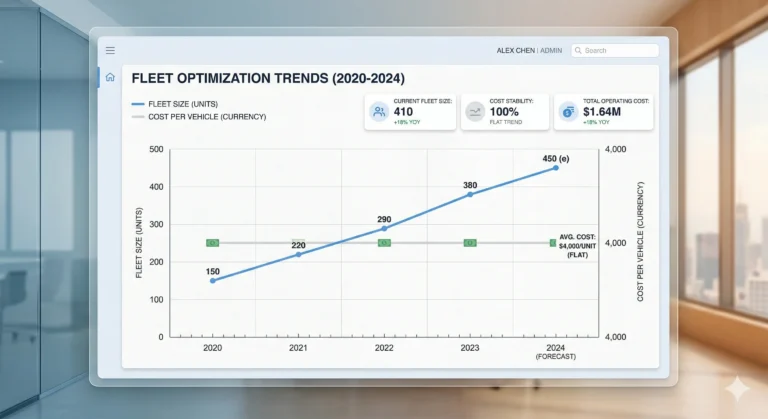

Fleet expansion without operational maturity increases complexity faster than profitability. For fleet owners, COOs, and investors, this means building scalable operations before fleet expansion is not just advisable—it is imperative. When structure does not precede scale, operational chaos outpaces revenue, costs multiply, and strategic opportunities evaporate. Only a disciplined operational architecture can convert volume growth into sustainable margin and stability.
Why Expansion Magnifies Inefficiencies
Every additional vehicle compounds operational complexity. As fleets grow, coordination density intensifies. More vehicles mean more overlapping routes, higher traffic in dispatch systems, and more frequent service cycles. The probability of accidents, delays, and compliance lapses rises exponentially rather than linearly. Replacement demand accelerates, stretching procurement and asset management. Simultaneously, data volume surges, threatening to overwhelm legacy systems and manual workflows. Weak operational foundations buckle under this pressure, often leading to breakdowns in service reliability, cost overruns, and reputational risk. Therefore, scalable systems must be in place before growth, or inefficiencies will dominate.
Scalable Intake Architecture
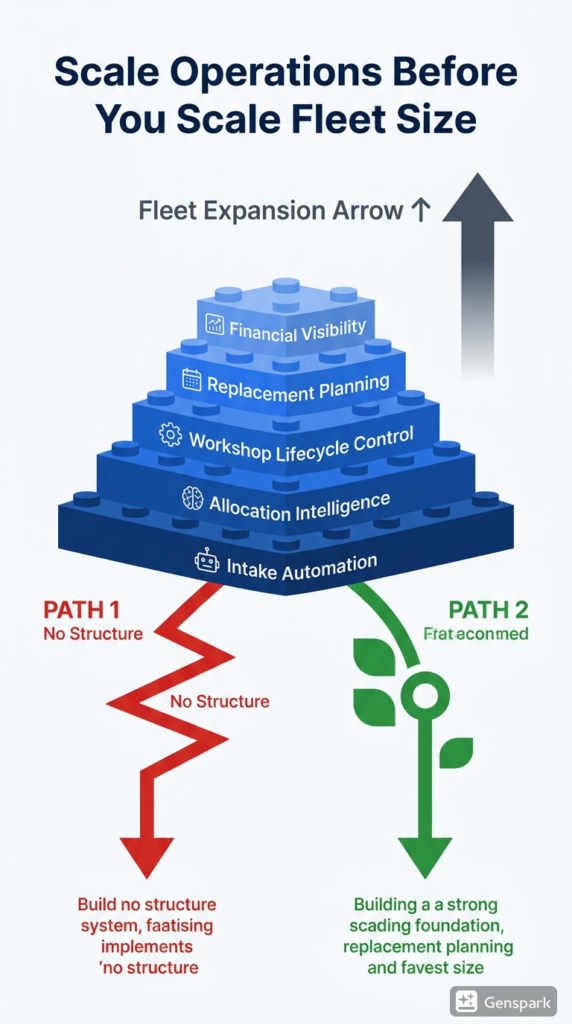
Unstructured intake processes create bottlenecks as volumes rise. Therefore, an automated ticket classification system is essential. Intelligent intake platforms categorize each request—maintenance, compliance checks, incidents—immediately upon entry. Direct routing ensures that each ticket reaches the right team or specialist without manual triage. SLA enforcement mechanisms monitor resolution timelines, triggering alerts when service thresholds are threatened. Additionally, maintaining a centralized communication log guarantees that every stakeholder accesses the same information, eliminating miscommunication. These intake structures prevent chaos at scale, transforming incoming volume from a liability into a controllable asset.
Allocation Intelligence Before Growth
Manual dispatch systems falter as fleet size increases. To ensure allocation stability, real-time availability maps must display vehicle status across the entire network. Driver tracking overlays location data with schedule adherence, surfacing potential bottlenecks and inefficiencies immediately. Conflict alerts automatically detect double bookings, route overlaps, and capacity mismatches, allowing managers to intervene before issues escalate. Geo-balancing algorithms distribute load according to regional demand and resource availability, stabilizing utilization. In the absence of these tools, manual allocation becomes error-prone and reactive, leading to lost revenue and spiraling operational overhead.
Workshop Lifecycle Control
As the vehicle count climbs, so does the complexity of workshop management. Implementing stage tracking for every unit—diagnosis, repair, quality check, and ready-for-dispatch—enables visibility and accountability at each phase. Approval automation accelerates workflow, reducing delays caused by manual sign-offs. Ready-date forecasting leverages predictive analytics to anticipate when vehicles will re-enter service, allowing for proactive scheduling. Crucially, downtime measurement quantifies the opportunity cost of each hour a vehicle is off the road. Prioritizing downtime compression before expansion is not optional; it is foundational. Without this, service levels degrade and total cost of ownership soars.
Replacement Planning Framework
Growth multiplies replacement complexity. Off-road detection systems continuously monitor fleet health, flagging units requiring imminent replacement. Replacement pool forecasting models future demand, ensuring sufficient backup vehicles are available without excessive idle inventory. Priority segmentation ranks assets by business criticality, aligning replacement resources with operational impact. Redeployment sync coordinates the return of serviced vehicles and the withdrawal of aging assets, keeping utilization stable. This structured approach to replacement planning prevents disruptive utilization swings and protects revenue continuity.
Financial & Dashboard Readiness
Investors and executives demand immediate insight into operational economics, especially during growth phases. Real-time cost logging captures expenses as they occur, eliminating lag between activity and financial reporting. Revenue per vehicle metrics correlate asset deployment with top-line performance, highlighting under- and over-utilized units. Utilization analytics consolidate data into actionable patterns, guiding strategic decisions. Margin per asset reporting reveals profit drivers and exposes margin erosion before it undermines expansion ROI. Unified dashboards, aggregating these KPIs, drive investor confidence and support agile course corrections as the fleet scales.
FAQ: Scalable Operations & Fleet Expansion
Because immature systems amplify every inefficiency as volume rises. Mature operations absorb growth without imploding, ensuring that each additional vehicle generates profit rather than chaos.
Risks include coordination breakdowns, rising downtime, diminished service quality, compliance failures, runaway costs, and reputational damage—all intensified by scale without structure.
High utilization maximizes return on each asset. Poor utilization, on the other hand, means new vehicles generate cost without sufficient revenue, eroding ROI and delaying payback periods.
Critical systems include automated intake and routing, real-time allocation intelligence, workshop lifecycle tracking, replacement planning frameworks, and unified financial dashboards.
Proactive replacement planning stabilizes asset availability, reduces downtime, and maintains consistent service delivery, all of which protect profitability as the fleet grows.
Conclusion
Fleet expansion amplifies both strengths and weaknesses. Companies that build scalable operations before fleet expansion grow sustainably. Those who expand prematurely increase volatility.
Structure first. Scale second.