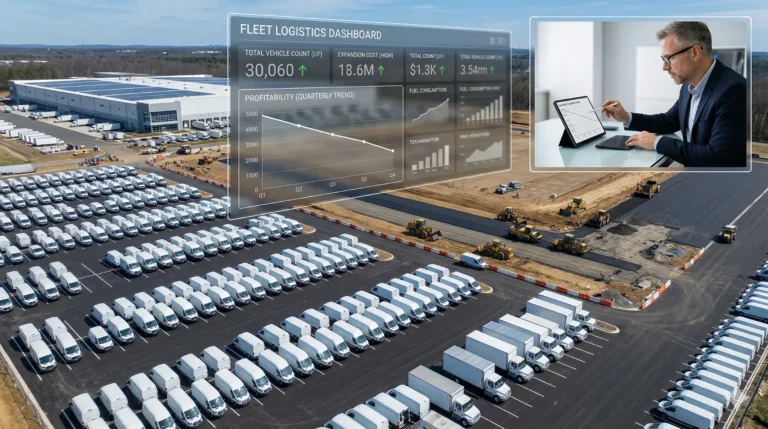
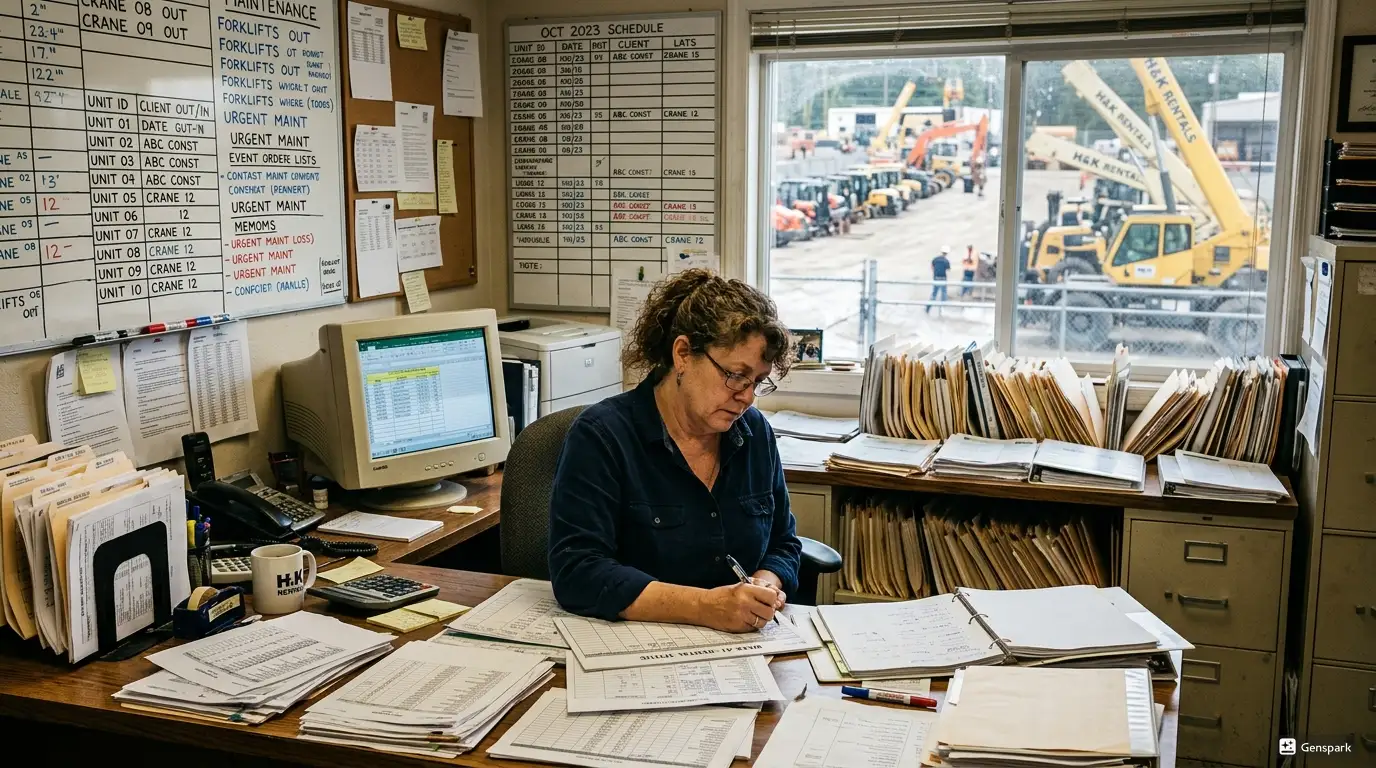
Growing rental companies often assume that increasing fleet size automatically increases profitability. However, operational mistakes during growth phases quietly erode margins, destabilize teams, and reduce utilization. The reality is that growth exposes underlying structural weaknesses, forcing operators to confront inefficiencies that were previously masked by smaller scale. Consequently, rental fleet owners, COOs, and operations managers must scrutinize their operational foundations before scaling up, or risk setbacks that can be both costly and difficult to reverse.
Scaling Fleet Size Without Scaling Systems
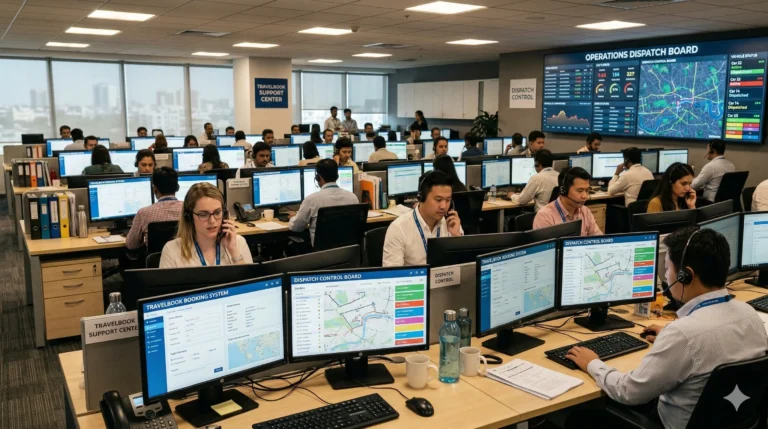
It is tempting to focus on acquiring more vehicles as a signal of company strength. However, when more vehicles are managed with the same coordination structure, cracks quickly appear. Many growing rental companies remain dependent on spreadsheets, manual allocation, and a patchwork of fragmented tools. As vehicle counts rise, these legacy coordination methods become bottlenecks that slow responsiveness and create confusion.
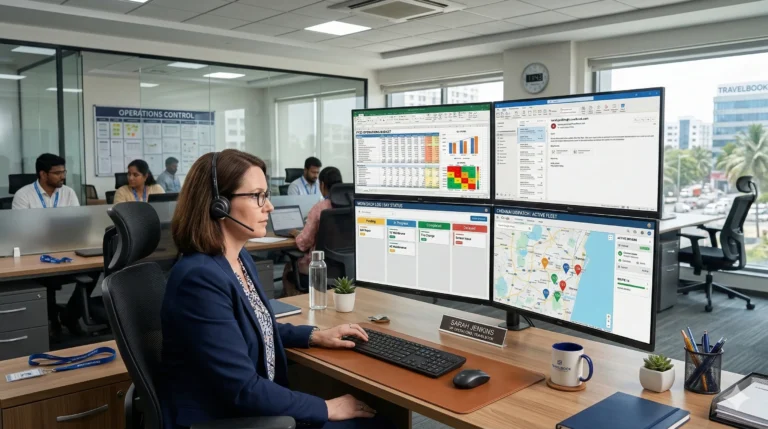
Notably, spreadsheet dependency leads to errors, duplication, and version control nightmares. Manual allocation, meanwhile, strains as asset counts increase—what once worked for 50 vehicles collapses at 200. Fragmented tools, each tracking a slice of the operation, mean critical information is siloed and inaccessible. Ultimately, expanding inventory without a robust operational architecture is a common but costly mistake. Therefore, scalable systems must be developed in tandem with fleet growth to ensure continued efficiency and control.
Ignoring Replacement Planning
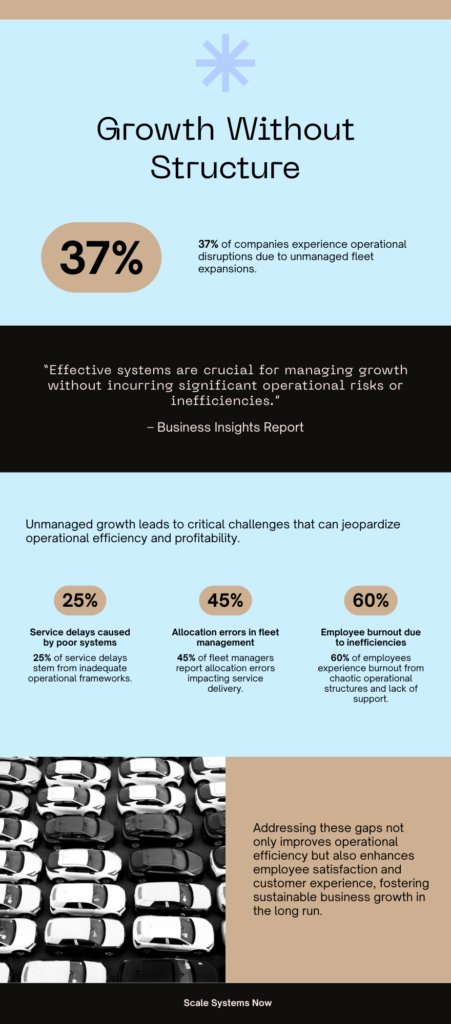
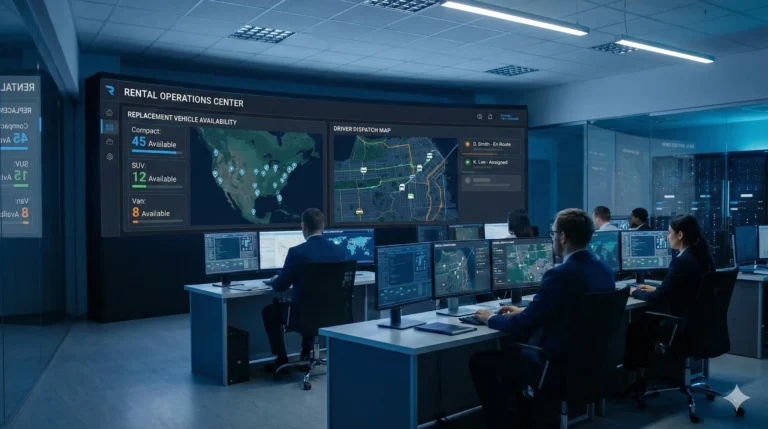
A second critical misstep is the absence of structured replacement planning. Many rental operators lack automated triggers for asset replacement, instead opting for reactive decisions based on anecdotal workshop feedback or sudden breakdowns. This approach leads to workshop overlap, where multiple vehicles require service or replacement simultaneously, straining resources and reducing availability.
Moreover, double allocation and increased idle days often occur when assets are not proactively cycled out. Vehicles that should be retired remain in the pool, absorbing insurance and maintenance costs while contributing little revenue. Treating replacement as a reactive event instead of a structured, data-driven process ultimately inflates downtime and erodes profitability. Consequently, implementing automated replacement triggers and predictive analytics is essential for sustainable growth.
Poor Service & Maintenance Scheduling
Service and maintenance are cornerstones of fleet reliability, yet many rental companies rely on manual scheduling even as they scale. Preventive maintenance often gets clustered at the same intervals, overwhelming workshops and resulting in extended downtime. Furthermore, the absence of mileage-based automation means that service events are triggered by guesswork rather than actual asset usage.
Workshop bottlenecks become more common as a result. Vehicles sit idle, awaiting service slots, while customers experience delays. Downtime expands, utilization drops, and the company’s reputation suffers. Ultimately, manual service scheduling at scale is unsustainable. Therefore, adopting automated, usage-based maintenance scheduling is vital to protect asset productivity and customer satisfaction.
Data Fragmentation & Visibility Gaps
As rental companies grow, data fragmentation frequently intensifies. Intake may occur in one system, dispatch in another, and workshop records tracked separately. Finance teams, meanwhile, often reconcile critical data only weekly, introducing lag and inaccuracies.
The absence of a single source of truth creates visibility gaps that hinder decision-making. Leaders struggle to access real-time information on fleet status, asset utilization, or pending maintenance. As a result, opportunities for optimization are missed and risks go unmanaged. Notably, the mistake here is failing to consolidate data into an integrated platform. Therefore, investing in unified fleet management solutions is imperative to gain the holistic visibility necessary for agile operations.
Hiring More People Instead of Fixing Workflow
A common reaction to operational strain is to hire more staff. However, simply adding headcount does not address underlying workflow inefficiencies. Communication overload ensues as teams expand, leading to rework cycles, escalation loops, and mounting burnout risk.
Escalation loops become more frequent as issues are handed off between departments without clear ownership. Communication overload results in missed messages and errors. Ultimately, hiring more people to compensate for broken processes increases overhead without resolving friction. Therefore, rental companies must focus on streamlining workflows and reducing manual touchpoints before scaling their teams.
Lack of Profit Per Vehicle Monitoring
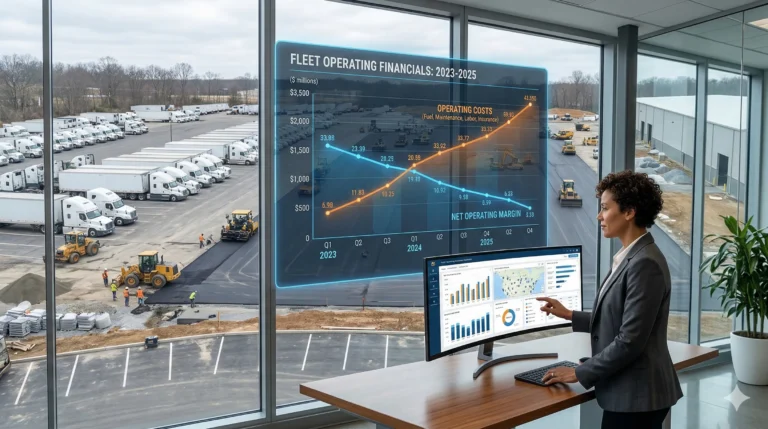
Another prevalent mistake is the failure to monitor profit at the asset level. Revenue is often tracked globally, masking underperforming vehicles that quietly leak costs. Without asset-level performance metrics, utilization blind spots develop and cost leakages go unnoticed.
Consequently, companies may scale revenue without tracking margin per asset, resulting in misleading growth metrics. Notably, this oversight makes it difficult to identify which vehicles contribute positively to the bottom line and which are liabilities. Therefore, implementing profit per vehicle monitoring is essential to ensure that growth yields real gains.
Frequently Asked Questions
The most significant mistakes include scaling fleet size without updating operational systems, ignoring structured replacement planning, relying on manual maintenance scheduling, fragmenting data across multiple tools, hiring more staff instead of fixing workflows, and failing to monitor profit at the vehicle level.
Growth introduces more assets, customers, and transactions. Without scalable systems, manual processes become strained, leading to errors, delays, and reduced visibility. Complexity increases exponentially as coordination demands rise.
When replacement planning is reactive, vehicles remain in the fleet past their optimal lifecycle, increasing maintenance costs, idle days, and risk of breakdowns. This inflates operating expenses while reducing asset productivity and profitability.
Fleets should consider upgrading systems before operational strain becomes visible—ideally when growth is anticipated, or when current tools start to impede responsiveness, visibility, or data accuracy.
Manual coordination requires more staff time to manage allocations, schedules, and communication. As fleet size grows, these processes consume more resources, leading to higher overhead and more frequent errors.
Conclusion
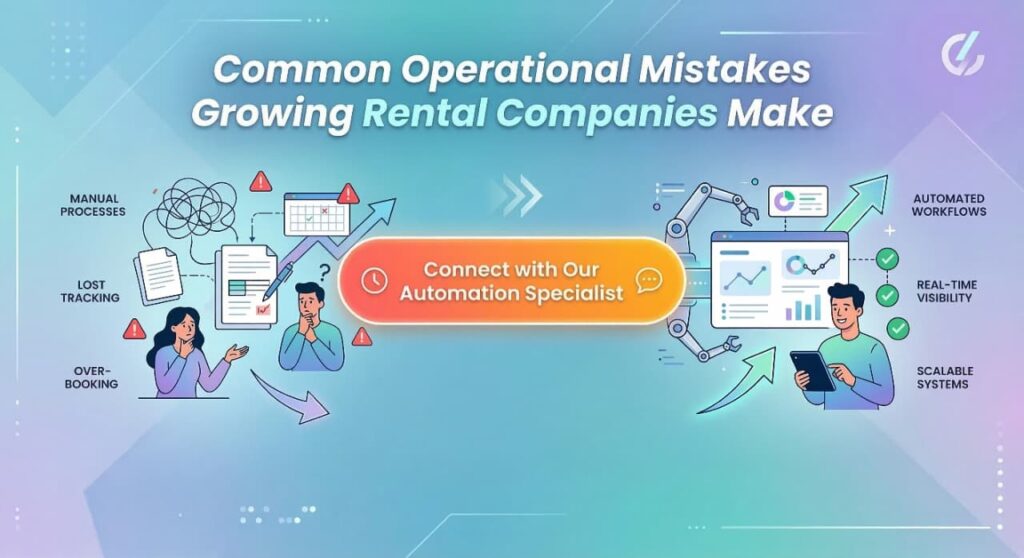
Growth does not create operational problems. It exposes them.
Rental companies that scale structure alongside fleet size maintain utilization, reduce overhead, and protect margins. Ultimately, robust systems, integrated data, and disciplined operational planning are the foundation for sustainable expansion.
Scale systems before scale magnifies mistakes.