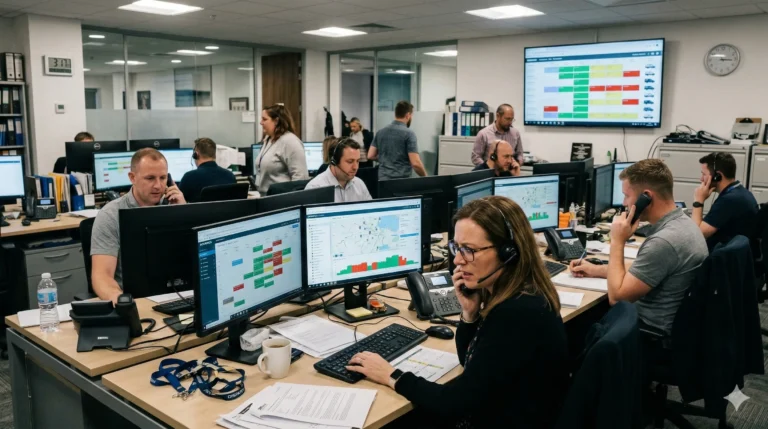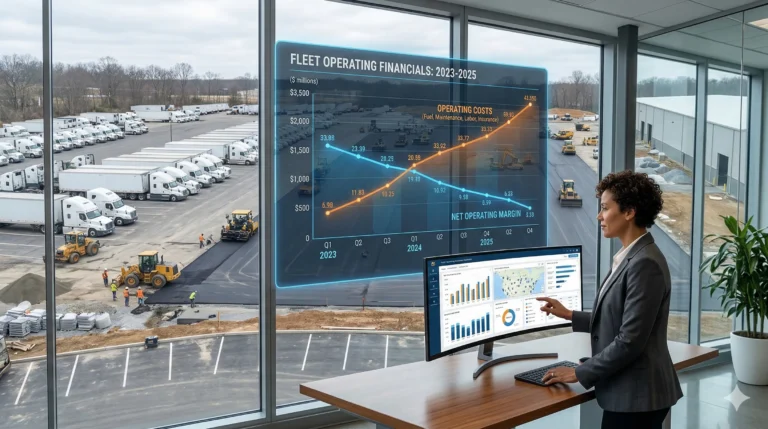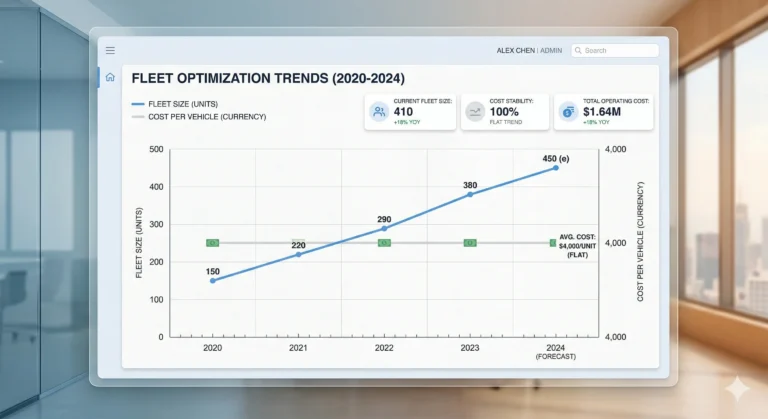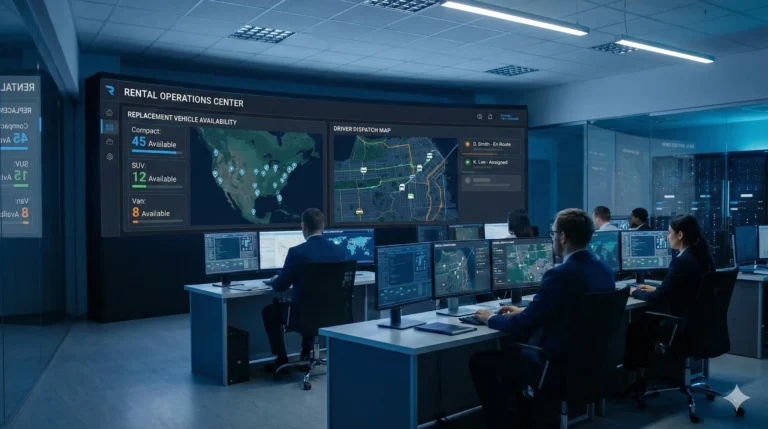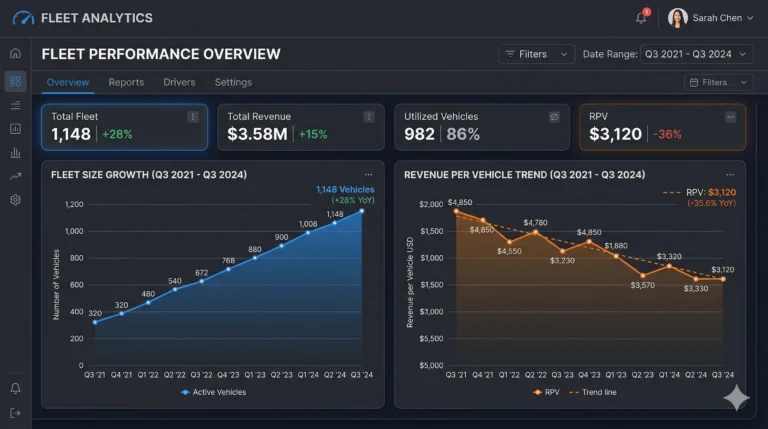

Fleet companies must reassess their operations before expanding further, as growth can amplify existing inefficiencies. While adding vehicles increases capacity, weak workflows multiply coordination pressure and steadily erode margins. Consequently, operational redesign must precede any fleet expansion—not only to support growth, but to ensure that growth translates into sustainable profitability.
Growth Magnifies Operational Weakness
As fleet companies pursue aggressive growth targets, operational density increases at an unprecedented rate. Every additional vehicle introduces complexity across multiple dimensions:
- Service cycles increase: More vehicles inevitably result in more scheduled and unscheduled maintenance events. If workflows are not streamlined, the influx quickly overwhelms existing processes.
- Accident exposure rises: As fleet size grows, so does the likelihood of accidents. Each incident creates additional administrative, logistical, and financial strain.
- Dispatch movements surge: Incremental vehicles lead to more frequent dispatches, intensifying the need for precise coordination and real-time tracking.
- Replacement demand escalates: A larger fleet means higher probability that assets will require urgent replacement, exposing gaps in planning if systems are not robust.
- Data complexity multiplies: With more vehicles, data inflows grow exponentially—not linearly. This overload challenges reporting, analytics, and rapid decision-making.
As a result, operational density doesn’t simply grow alongside the fleet—it expands exponentially. Without a deliberate redesign, the risks and costs associated with this density spiral out of control, threatening both service stability and profit margins.
Intake & Routing Instability
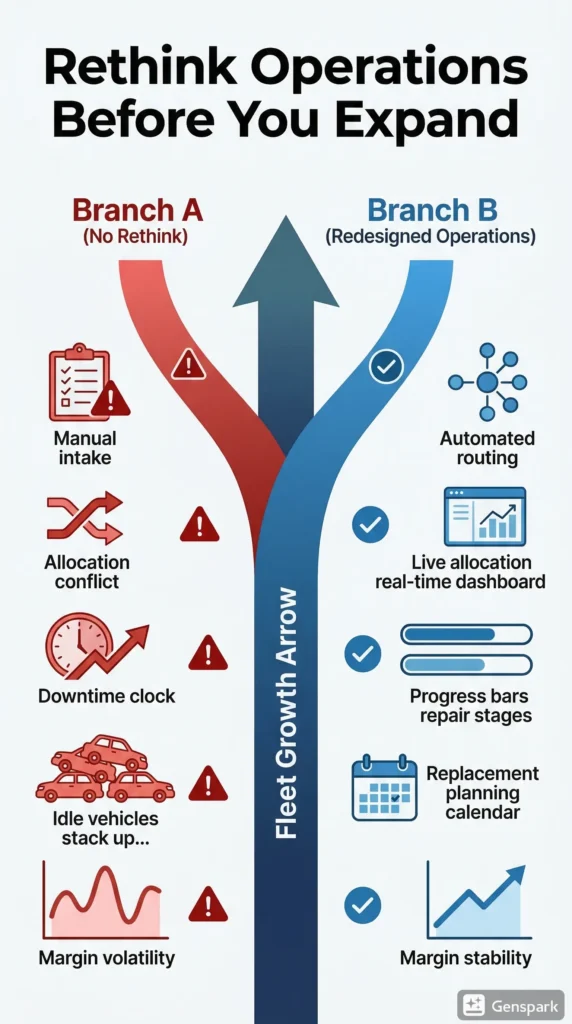
In many organizations, intake and routing remain manual, subjective, and prone to error. This instability threatens the entire operational chain:
- Manual ticket handling creates bottlenecks and delays, as human intervention is required at every stage of the process.
- Urgency misclassification results from inconsistent triage, which can escalate minor issues while allowing critical problems to languish.
- Escalation loops emerge when unclear reporting pathways force repeated handoffs, wasting valuable time and resources.
- Communication overload follows as teams scramble to track status, leading to missed signals and dropped tasks.
Ultimately, instability at the intake stage destabilizes downstream workflows. When the entry point is inconsistent, every subsequent process inherits this uncertainty, compounding inefficiencies as the fleet grows.
Allocation Chaos & Utilization Decline
As the number of vehicles and service requests rises, allocation complexity increases disproportionately. Without intelligent allocation, several issues emerge:
- Double bookings become frequent, leading to scheduling conflicts and operational delays.
- Idle vehicles go unnoticed, causing underutilization that directly impacts cost efficiency.
- Replacement conflicts occur when vehicles slated for maintenance are simultaneously needed for active service, creating gaps in coverage.
- Geographic imbalances arise, with too many assets concentrated in certain locations while others are left underserved.
Therefore, intelligent, automated allocation becomes a prerequisite for sustainable growth. Absent this, utilization rates decline, vehicles sit idle, and resources are wasted—undercutting the very rationale for expansion.
Downtime & Replacement Volatility
Unchecked, downtime can quietly erode the efficiency and profitability of a growing fleet. Several contributing factors must be addressed:
- Repair stage ambiguity leads to confusion about asset status, prolonging time out of service.
- Approval lag—often the result of manual sign-offs—extends repair cycles and increases asset unavailability.
- Replacement guesswork arises in the absence of data-driven allocation, resulting in mismatches between needs and available resources.
- Idle-day accumulation occurs when assets spend unnecessary time off the road, compounding lost revenue as the fleet grows.
During expansion, these inefficiencies multiply. Downtime compounds, draining profitability and frustrating customers. Only by compressing downtime through process redesign can fleet operators protect their margins amid growth.
Financial Blind Spots During Growth
Financial controls often lag behind operational expansion, creating dangerous blind spots:
- Delayed cost logging leaves managers unaware of real-time expenses, undermining budget discipline.
- Lack of revenue per vehicle visibility makes it impossible to identify underperforming assets or justify further investment.
- Margin volatility spikes as fixed and variable costs fluctuate without immediate transparency.
- Unpredictable ROI becomes the norm, eroding investor confidence and strategic clarity.
Live dashboards and real-time cost logging are essential indicators of expansion readiness. Without them, financial blind spots threaten to derail even the most ambitious growth initiatives.
Redesigning Before Scaling: The Structured Solution
To stabilize expansion and protect profitability, fleet companies must implement a structured operational architecture that addresses every stage of the workflow:
Automated Intake
Replacing manual ticket handling with automated intake systems ensures accurate, consistent, and timely triage of every issue. This reduces bottlenecks, improves urgency classification, and sets a reliable foundation for downstream processes.
Live Allocation
Dynamic, data-driven allocation engines eliminate double bookings and maximize utilization. By continuously monitoring demand, location, and asset status, these systems ensure the right vehicles are deployed at the right time and place.
Stage-Based Workshop Lifecycle
A clearly defined, stage-based approach to workshop management brings transparency to every repair. Automated updates, clear status markers, and real-time communication compress downtime and streamline approvals.
Replacement Planning
Proactive, data-informed replacement planning anticipates asset needs before they become urgent. By integrating maintenance schedules, utilization rates, and geographic trends, companies can align replacements with operational realities.
Real-Time Cost Logging
Automated, real-time cost capture provides immediate visibility into operational expenses. This transparency enables rapid intervention, proactive cost control, and accurate margin analysis.
Unified Dashboard Control
A single, unified dashboard consolidates operational and financial data, empowering managers to monitor performance, identify trends, and make informed decisions—instantly. This control center is the linchpin of scalable fleet operations.
By embedding these elements, companies transform operational chaos into a resilient, scalable system that supports sustainable growth.
FAQ: Rethinking Operations Before Fleet Growth
Because growth amplifies both strengths and weaknesses. If workflows are inefficient, expansion multiplies coordination challenges and margin risk. Redesigning first ensures stability and scalability
Risks include exponential growth in coordination complexity, underutilization, downtime, financial opacity, and increased accident exposure.
Utilization is a direct driver of revenue per asset. Poor utilization undermines ROI, turning growth into a cost rather than a profit driver.
Before adding significant capacity or entering new markets, to ensure processes can handle increased volume and complexity.
Effective replacement planning reduces idle days, minimizes emergency rentals, and protects margins by aligning asset availability with demand.
Conclusion
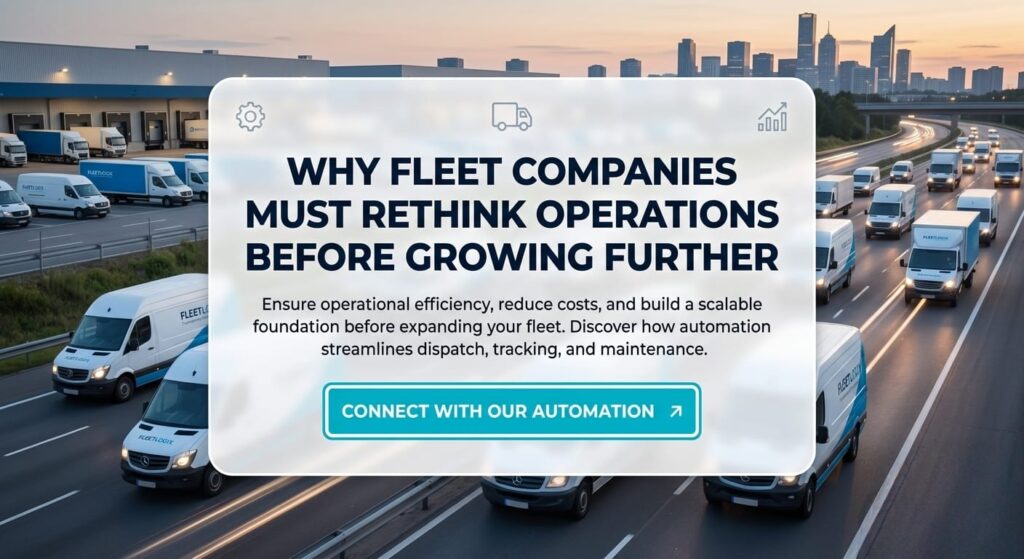
Fleet expansion multiplies both efficiency and inefficiency. Companies that rethink operations before growing further scale with stability. Those that expand prematurely amplify volatility.
Redesign first. Then grow.