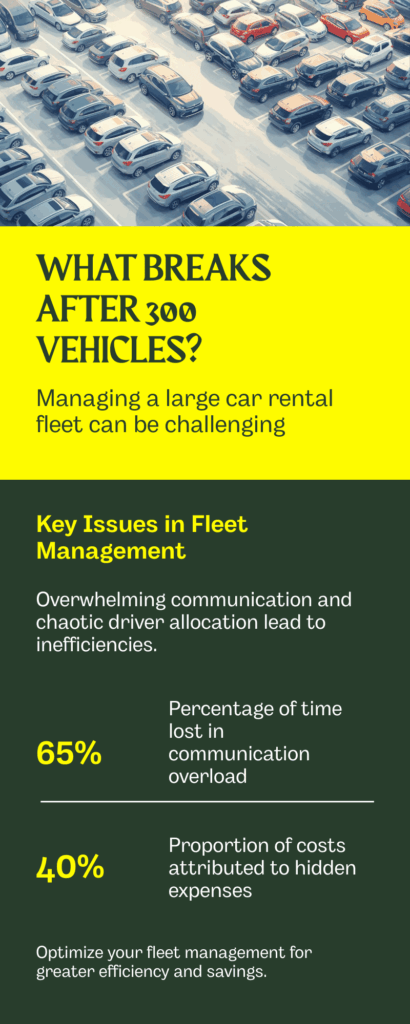
As car rental operators scale their businesses, a pivotal threshold often emerges around the 300-vehicle mark. This is not a random figure; rather, it’s a practical inflection point where the operational complexity of car rental fleet management intensifies dramatically. While growth signals business success, it also brings a host of new challenges that, if left unaddressed, can erode profitability and operational control. Understanding precisely what breaks after 300 vehicles—and how to fix it—is essential for any operator aiming for sustainable expansion.
The Invisible Tipping Point: Why 300 Vehicles is Different
For fleets under 300 vehicles, manual processes and ad-hoc systems may suffice. However, as the count climbs beyond this threshold, inherent limitations in workflow, communication, and oversight start to manifest. The pace of small-scale growth does not prepare operators for the exponential increase in task volume, data flow, and stakeholder coordination required at larger scales.
Moreover, research from the International Transportation Forum and fleet software providers indicates that administrative overhead and error rates rise sharply in larger fleets—often by 30–40%—when systems are not upgraded in lockstep with growth. Consequently, operational cracks widen, directly impacting fleet profitability tracking and customer experience.
What Breaks After 300 Vehicles?
1. Workflow Fragmentation
As fleet size increases, so does the complexity of daily operations. Task allocation, vehicle dispatch, check-in/check-out, inspection, and documentation workflows multiply. In contrast to smaller fleets where a single manager may oversee multiple functions, larger fleets require specialized roles and seamless handovers.
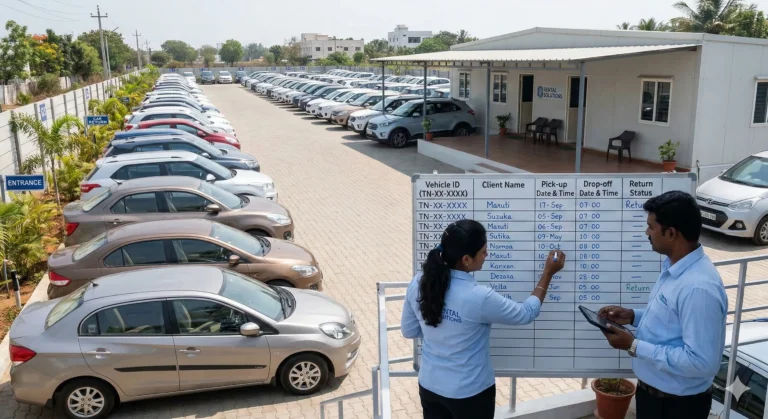
However, without robust car rental fleet management systems, workflows become fragmented. Teams begin to rely on isolated spreadsheets, manual logs, and disparate communication channels. As a result, critical tasks fall through the cracks, leading to missed maintenance, delayed customer turnarounds, and compliance oversights.
2. Cost Leakage
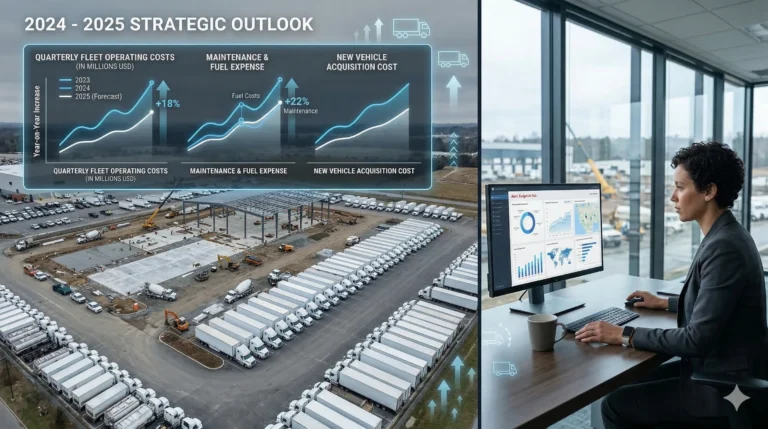
Cost control becomes significantly more difficult as transactional volume increases. Small inefficiencies—such as unnecessary idle time, suboptimal routing, or overlooked damage—scale into substantial losses. Notably, the absence of a unified fleet management software solution prevents real-time expense visibility, making it hard to pinpoint and rectify cost drains.
Moreover, leasing, insurance, and maintenance contracts become harder to track. Without automated alerts and consolidated reporting, duplicate payments and missed renewals are common. Therefore, cost leakage grows in both frequency and magnitude, directly undermining fleet profitability tracking.
3. Driver Coordination Breakdown
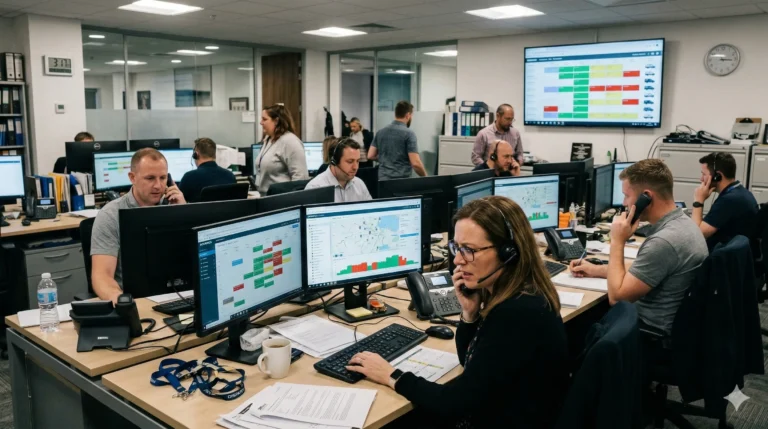
Coordinating a small team of drivers is manageable with basic tools. However, as the driver pool expands, manual scheduling introduces confusion and redundancy. For instance, double bookings or last-minute cancellations become more frequent without an integrated system.
Furthermore, communication gaps between drivers, dispatchers, and workshop teams lead to inefficiency. Vehicle availability suffers as drivers wait for assignments or return vehicles late, impacting customer satisfaction and utilization rates. Ultimately, fragmented communication results in lost revenue and increased overtime costs.
4. Workshop Bottlenecks
Maintenance and repair capacity rarely scales at the same pace as fleet expansion. When the number of vehicles outpaces workshop throughput, bottlenecks emerge. A backlog of vehicles waiting for routine service or repairs can quickly escalate, leading to longer downtimes and reduced fleet availability.
Without a dedicated workshop management system, scheduling becomes reactive rather than proactive. Preventive maintenance is often delayed, which increases the risk of breakdowns and costly emergency repairs. Consequently, overall vehicle uptime drops, and the total cost of ownership rises.
5. Management Visibility Gaps
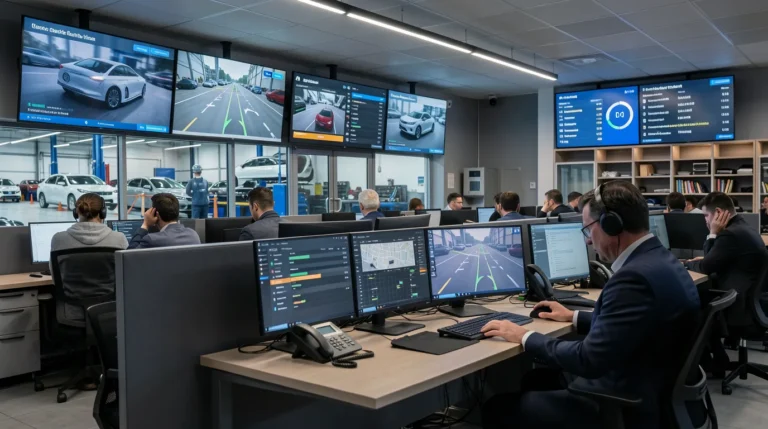
At scale, the sheer volume and dispersion of data obscure real-time fleet status. Manual tracking of vehicle location, driver performance, and operational KPIs becomes impractical. Decision-makers lose the ability to quickly identify underperforming assets or areas where intervention is needed.
In the absence of a comprehensive vehicle tracking system and centralized car rental CRM, managers are forced to make decisions based on outdated or incomplete information. As a result, strategic planning suffers and opportunities for optimization are missed.
The Solution: Structured CRM and Fleet Automation
Addressing these challenges requires a shift from patchwork solutions to structured, integrated systems. Implementing a car rental CRM combined with rental fleet automation and advanced fleet management software delivers several operational advantages without adding administrative burden.
Unified Workflows
A modern car rental fleet management platform centralizes all operational processes. Task assignments, vehicle status updates, and documentation flow seamlessly between departments, reducing redundancy and minimizing errors. For example, automated checklists ensure every step—from vehicle handover to inspection—is completed and logged.
Real-Time Cost Control
Integrated fleet profitability tracking provides immediate visibility into expenses and revenue streams. Automated alerts flag anomalies, such as excessive idle time or maintenance cost spikes, enabling timely intervention. Moreover, consolidated reporting streamlines financial oversight and supports data-driven decision-making.
Driver and Dispatch Coordination
A robust car rental CRM enables real-time scheduling and communication with drivers. Automated notifications reduce confusion and prevent double bookings. Furthermore, integration with mobile apps allows for instant updates, digital signatures, and location tracking, ensuring drivers and dispatchers are always aligned.
Workshop Optimization
A dedicated workshop management system streamlines maintenance scheduling and parts inventory tracking. Preventive maintenance is triggered automatically based on mileage or time intervals, reducing unexpected breakdowns. In addition, repair histories are centralized, supporting warranty claims and regulatory compliance.
Management Dashboards and Analytics
Comprehensive fleet management software delivers real-time dashboards summarizing key metrics—vehicle utilization, maintenance status, driver performance, and profitability. This level of visibility empowers managers to make informed decisions, optimize resource allocation, and benchmark performance across locations.
Data-Driven Impact: What the Numbers Say
According to industry benchmarks, fleets adopting integrated car rental CRM systems and rental fleet automation report up to 25% reduction in administrative workload and a 15–20% improvement in fleet utilization. Additionally, workshop management system adoption correlates with a 30% decrease in average vehicle downtime and significant savings on repair costs.
Moreover, organizations with real-time vehicle tracking systems reduce unauthorized use and loss incidents by over 30%. These results are not just anecdotal—they reflect the compound benefits of systematizing fleet operations at scale.
Strategic Insight: Scaling Beyond 300 Vehicles
Fleet growth is ultimately a systems challenge, not a simple matter of adding more vehicles. Operators who rely on manual processes or disconnected tools will inevitably face workflow fragmentation, cost leakage, and diminished management visibility as their fleets expand. In contrast, those who invest in structured car rental fleet management ecosystems position themselves to scale with control and confidence.
Therefore, the path to sustainable growth lies in recognizing that complexity compounds with size. By proactively adopting integrated fleet management software, car rental CRM, and workshop management systems, operators transform growth from a source of operational strain into a driver of long-term profitability.
Frequently Asked Questions
When a fleet crosses 300 vehicles, operational complexity increases exponentially. Customer communication becomes fragmented, driver allocation errors rise, workshop approvals slow down, and cost tracking becomes inconsistent. Without structured car rental fleet management systems, inefficiencies multiply and profitability declines.
Spreadsheets cannot provide real-time visibility across vehicle movement, repair status, driver productivity, and financial tracking simultaneously. As fleet size grows, manual coordination leads to data delays, duplication errors, and reporting inaccuracies. Fleet management software centralizes these functions into a controlled workflow.
Fleet management software creates a closed-loop system that captures customer requests, classifies urgency, assigns drivers, tracks workshop repairs, logs expenses, and updates dashboards in real time. This structured automation reduces downtime, eliminates duplication, and protects margins.
A car rental CRM ensures that every customer interaction—whether booking, breakdown, or recovery—is logged and classified correctly. It prevents missed urgent cases, improves response times, and connects customer communication with operational execution.
When repair approvals are delayed, vehicles remain idle. Each idle day reduces revenue per asset. A structured workshop management system tracks job status, quotation approvals, and turnaround times to minimize downtime.

Conclusion
Scaling a car rental fleet beyond 300 vehicles demands more than additional cars or drivers—it requires a strategic investment in systems and automation. By reframing fleet growth as a challenge of process and visibility, rather than a simple numbers game, operators ensure their organizations remain agile, resilient, and ready for the next stage of expansion.