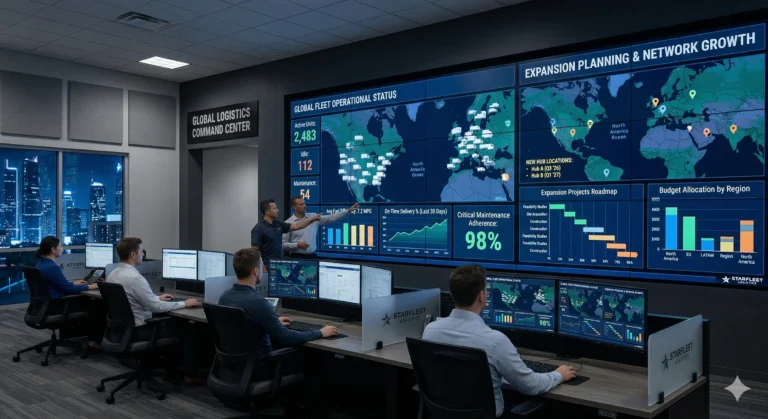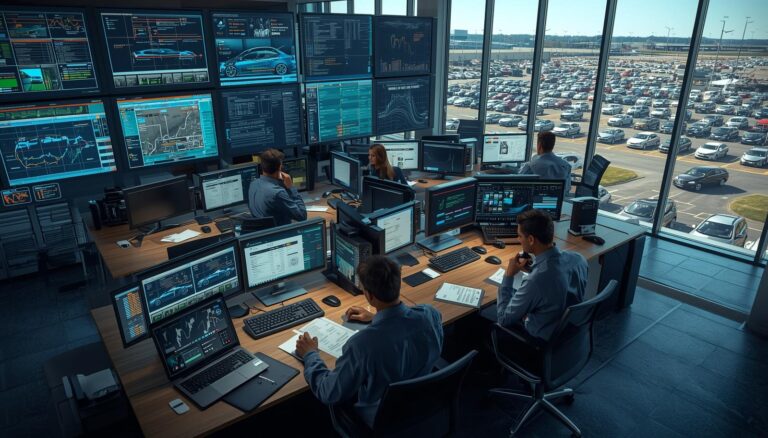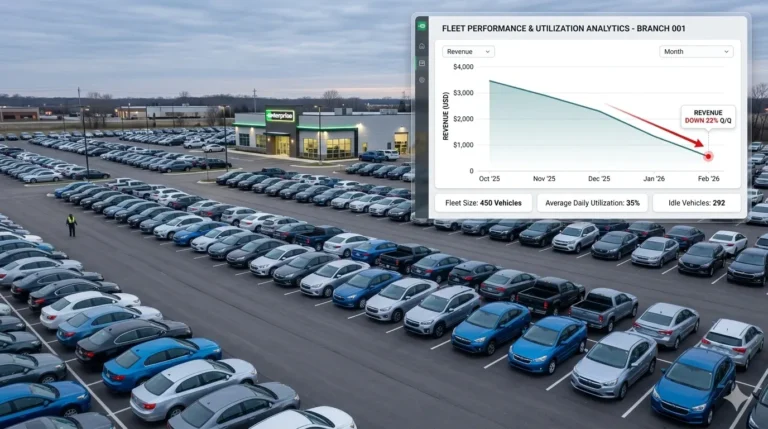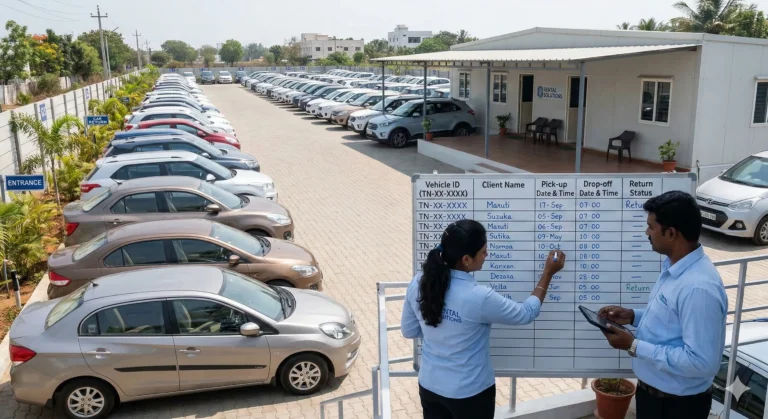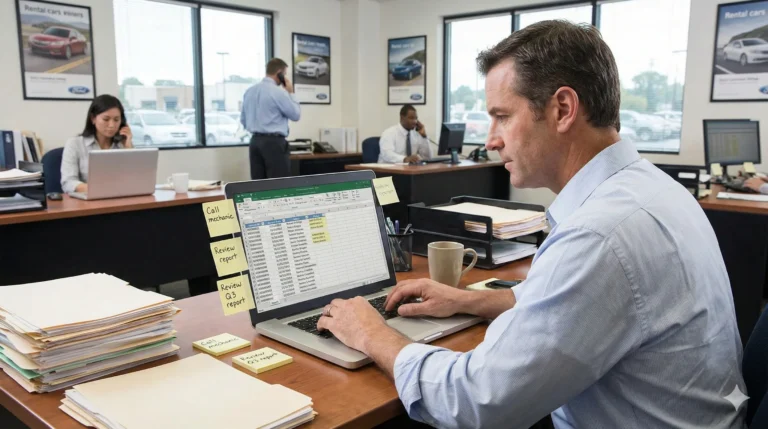
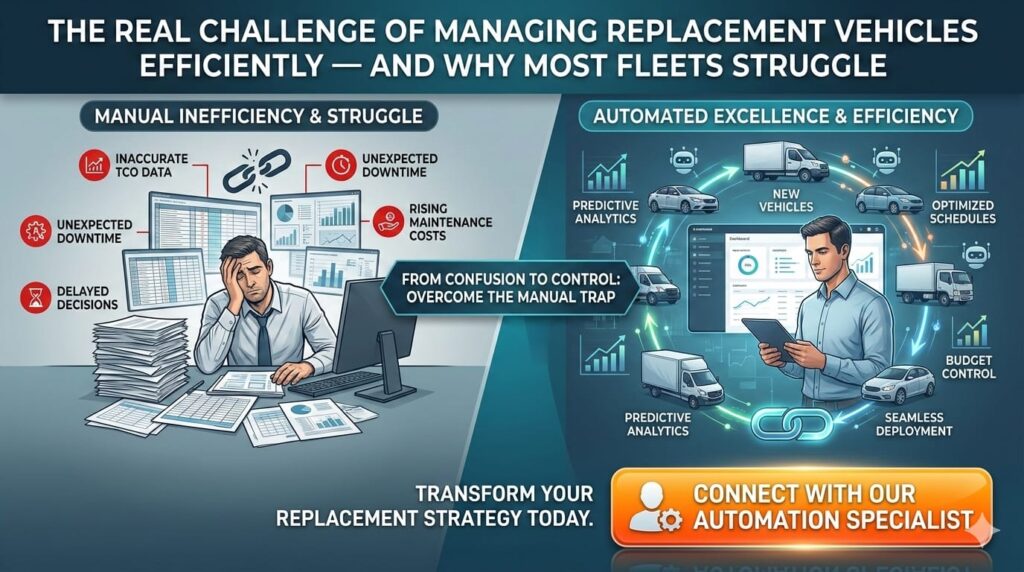
Managing replacement vehicles efficiently is one of the most underestimated operational challenges in large rental fleets. As a fleet grows, the complexity of coordinating replacements often surpasses the challenge of initial booking management. Notably, the core difficulty is not simply about having enough vehicles on hand — it’s about synchronizing workflows across departments, systems, and processes. Consequently, many fleet operators find themselves reacting to chaos rather than controlling outcomes.
Why Replacement Demand Scales Faster Than Fleet Size
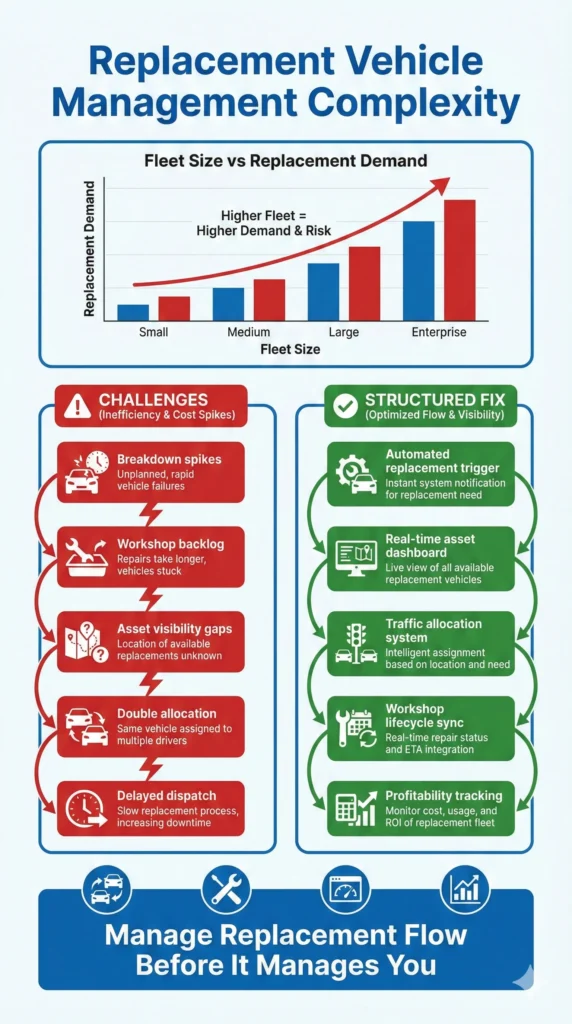
At first glance, it may seem intuitive that a larger fleet simply requires a proportionally larger replacement pool. However, the reality is far more complex. As fleet size increases, so does exposure to risk and operational disruption:
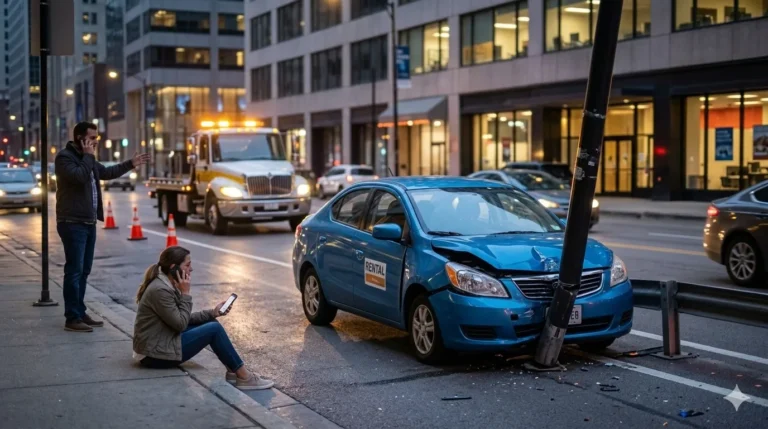
- Accidents Rise with Exposure: More vehicles on the road mean a higher probability of incidents. Even with robust driver safety programs, the law of averages ensures a steady stream of accident-related replacements.
- Workshop Downtime Multiplies: As the number of assets grows, so does the frequency of vehicles requiring workshop attention. This is not a linear relationship; operational bottlenecks and resource limitations can create unpredictable surges in replacement needs.
- Preventive Maintenance Overlap: Regular maintenance cycles, when managed across hundreds or thousands of vehicles, inevitably overlap. This creates clusters of out-of-service vehicles, further compounding replacement pressure.
- Recovery Cases Accumulate: Vehicles detained in recovery due to legal, insurance, or administrative issues can tie up the replacement pool unexpectedly.
Therefore, replacement demand grows nonlinearly — outpacing fleet expansion and challenging even the most well-resourced operations.
The Intake Classification Gap
A critical yet often overlooked challenge is the lack of structured intake classification. Replacement requests can arise from urgent breakdowns or scheduled services, but without a clear distinction, workflows stall:
- Urgent vs Planned Service: Urgent breakdowns demand immediate action, while planned service should be scheduled methodically. However, without intake classification, all requests are treated with similar urgency or, worse, delayed equally.
- Manual Approval Delays: Many fleets still rely on manual approvals, introducing unnecessary lag and subjectivity into the process.
- No Real-Time Asset Visibility: Without up-to-date information on asset status and location, matching requests with available vehicles becomes guesswork.
- Poor Urgency Prioritization: The absence of structured CRM classification leads to suboptimal prioritization, resulting in dissatisfied customers and wasted resources.
Consequently, fleets that lack automated replacement triggers and data-driven classification struggle to maintain service standards, especially during peak demand.
Traffic & Allocation Complexity
Replacement vehicle allocation is not just about having cars available. It’s about deploying the right asset, at the right time, to the right place — a logistical puzzle that intensifies with scale:
- Double Booking of Replacement Cars: Poorly integrated systems often lead to the same vehicle being assigned to multiple requests, creating operational embarrassment and customer frustration.
- Inaccurate Availability Data: Legacy systems and siloed spreadsheets rarely reflect real-time status, resulting in misallocated or stranded assets.
- Driver Dispatch Delays: Even if a replacement is ready, delays in dispatch can nullify the operational advantage, extending downtime and increasing costs.
- Geographic Imbalance: Replacement vehicles may be concentrated in low-demand areas while high-demand locations run dry, due to lack of centralized tracking.
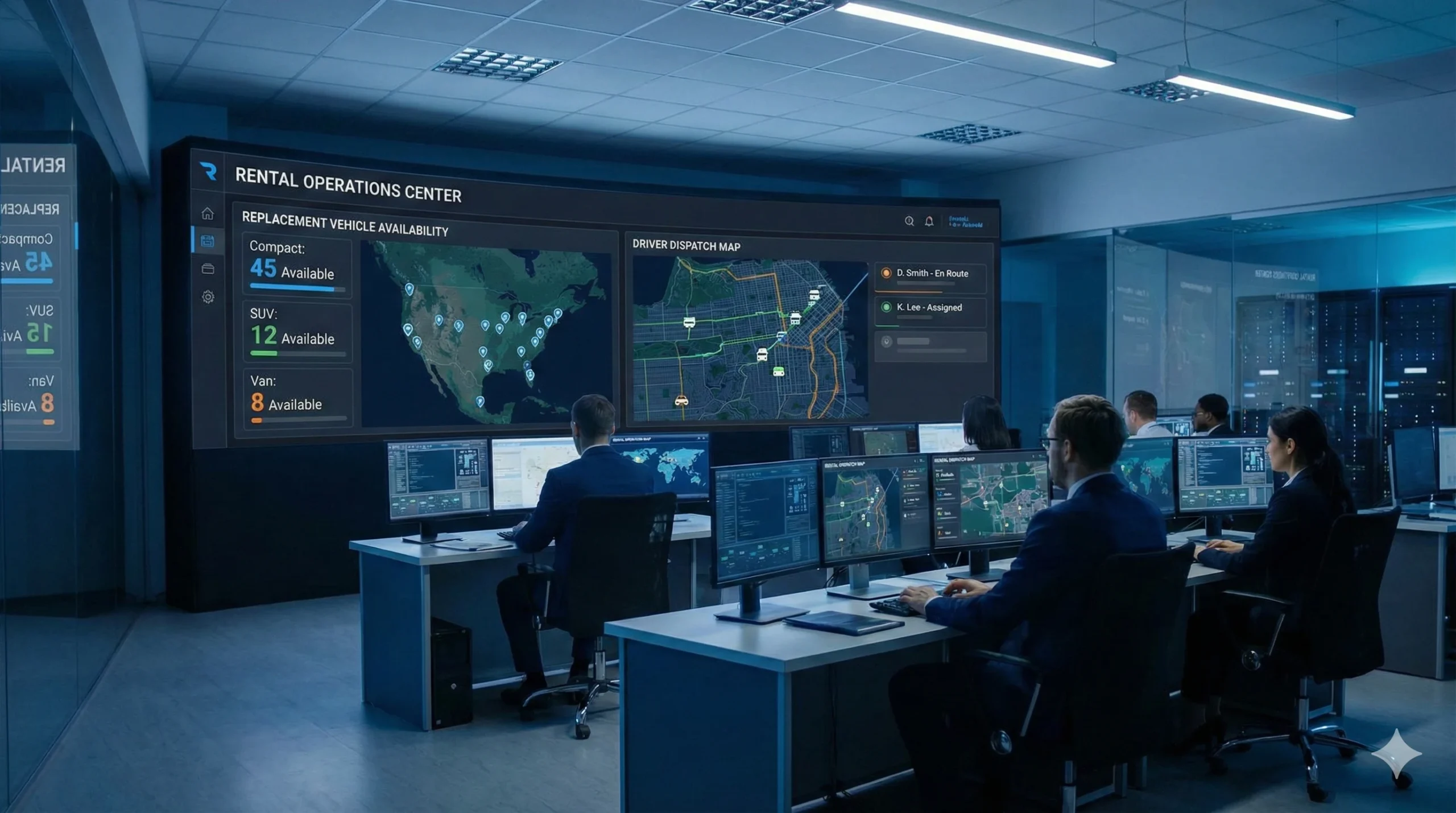
A robust, centralized traffic dashboard coupled with real-time asset tracking is therefore essential for efficient allocation and utilization.
Workshop Dependency & Idle Assets
The workshop is often a major bottleneck in the replacement vehicle lifecycle. When processes lack transparency and coordination, fleets suffer from:
- Vehicles Stuck Awaiting Approval: Lengthy waits for repair or replacement approval leave assets idle and unavailable.
- Replacement Pool Shrinking Unpredictably: Without visibility into workshop timelines, the replacement pool can suddenly shrink, leaving the operation exposed.
- No Estimated Ready-Date Visibility: Fleet managers are left guessing when vehicles will return to service, hampering allocation planning.
- Lack of Cross-Department Synchronization: Workshop, dispatch, and customer service teams often operate in silos, further exacerbating delays.
Therefore, integrating workshop processes and providing visibility into repair status is crucial for maintaining an agile replacement pool.
Financial Impact of Poor Replacement Management
Operational inefficiencies in replacement vehicle workflows have direct and significant financial consequences:
- Idle Days Cost: Every day a vehicle sits unused represents lost revenue and sunk cost.
- Emergency Rental Procurement: When internal replacements are unavailable, fleets are forced to procure emergency rentals — often at premium rates.
- Customer Dissatisfaction Refunds: Failure to meet service commitments can lead to refunds, credits, or future discounts, eroding margins.
- Lost Contract Renewals: Persistent service failures damage reputation and reduce customer retention.
Ultimately, tracking per-vehicle profitability and establishing cost controls for replacement operations is non-negotiable for sustainable growth.
The Structured Solution
So, how can fleets regain control? The answer lies in creating a closed-loop, structured system for replacement vehicle management:
- Breakdown/Event Classified: Every replacement request is categorized by urgency and type at intake.
- Automated Replacement Trigger: Based on classification, the system triggers the appropriate replacement workflow — urgent or planned.
- Asset Allocation: Replacement vehicles are allocated automatically based on real-time availability, location, and service requirements.
- Workshop Lifecycle Tracked: Each vehicle’s repair status, approvals, and estimated ready-date are tracked transparently.
- Cost Recorded: All costs are attributed to the relevant vehicle and customer account, enabling granular profitability analysis.
- Dashboard Updated: Centralized dashboards provide live insight into replacement flow, bottlenecks, and asset status.
Such automation and structure significantly reduce chaos, enabling fleets to scale without sacrificing reliability or profitability.
Frequently Asked Questions
Because as fleet size grows, the number and unpredictability of replacement triggers multiply, requiring advanced workflow synchronization beyond manual processes.
Larger fleets face non-linear increases in replacement demand due to more accidents, overlapping maintenance, and higher workshop dependency, making simple scaling of replacement pools inadequate.
Double booking usually occurs when systems are not integrated or asset status is not updated in real time, leading to conflicting allocations.
Automation eliminates manual bottlenecks by triggering replacements based on real-time data, ensuring vehicles are allocated efficiently and transparently.
Delays in the workshop extend the duration a replacement is needed, shrinking the available pool and increasing operational costs.
Conclusion
In summary, replacement vehicle chaos is not caused by a shortage of cars — it is caused by a lack of synchronization between people, processes, and technology. Rental companies that integrate replacement allocation into structured, automated workflows consistently maintain service reliability, even at scale. Ultimately, control replacement flow before replacement demand controls your margins.