As rental fleets scale, the coordination burden placed on customer service teams increases disproportionately. What begins as booking support gradually evolves into cross-department traffic control, escalation management, and operational troubleshooting. Notably, customer service teams become de facto coordinators when systems are fragmented, resulting in both operational inefficiency and mounting stress for frontline teams. This article examines how the escalation of coordination tasks impacts customer service centers at scale, and how structural solutions can provide much-needed relief.
Intake Becomes Traffic Control
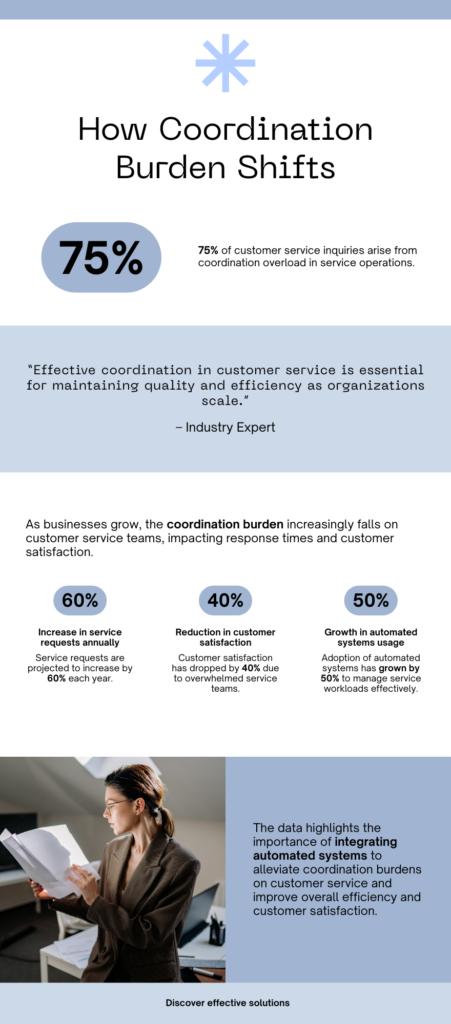
In the early stages of a fleet operation, customer service teams primarily handle straightforward booking and support requests. However, as the fleet grows, the volume and complexity of incoming requests multiply. Customers engage through multiple channels — phone calls, WhatsApp, email, and in-app messaging. Consequently, requests range from routine queries to urgent breakdowns, all intermingled in the same intake streams.
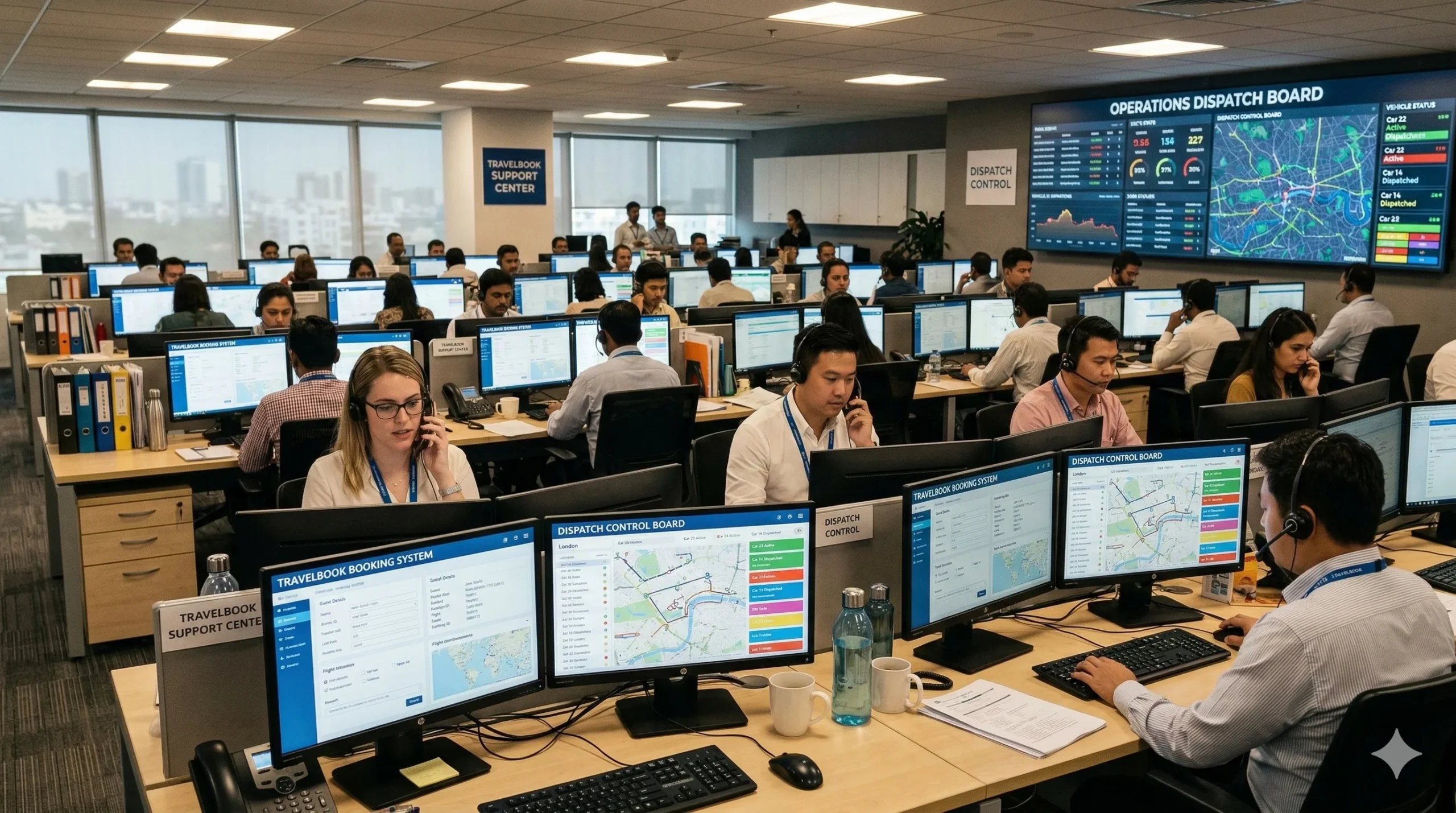
This diversity forces Customer Care Executives (CCEs) to constantly triage, categorize, and route cases. Some issues require immediate escalation to the traffic or workshop teams, while others can be resolved in-session. Manual routing becomes a daily reality, as CCEs must identify the correct department and escalate accordingly. Inevitably, escalation loops develop when frontline staff lack the authority or system access to resolve issues directly, resulting in time-consuming hand-offs and delayed resolutions.
Moreover, CCEs move far beyond traditional customer support; their roles now include traffic control, internal information relay, and even informal process orchestration. The lack of integrated systems exacerbates this burden, turning every intake into a coordination exercise.
Replacement & Dispatch Pressure
In a scaled environment, vehicle issues are not occasional—they are constant. Customers expect immediate replacements for breakdowns, accidents, or maintenance events. This expectation places immense pressure on CCEs, who are tasked with verifying vehicle availability, arranging dispatch, and communicating timelines, often without real-time tools.
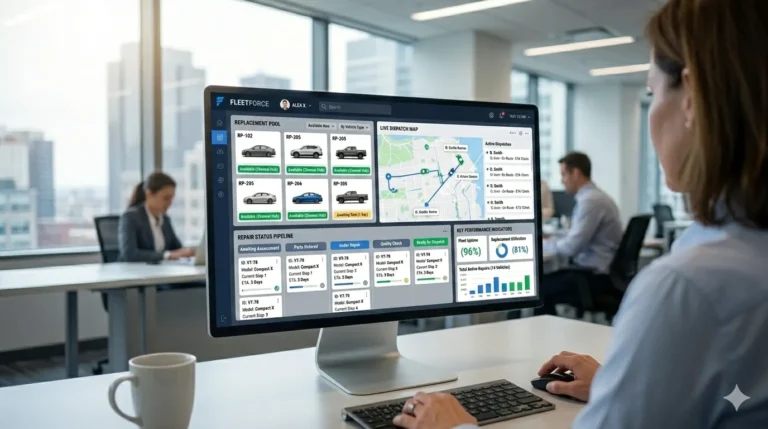
Most CCEs must check vehicle availability manually, navigating between outdated spreadsheets, multiple systems, or contacting operations teams directly. Driver coordination, rather than being automated or centrally managed, is typically handled indirectly by customer service, further compounding delays.
Frequent status follow-ups are the norm. CCEs must chase updates, confirm driver ETAs, and reassure customers, all while managing a growing queue of unresolved tickets. Ultimately, this allocation inefficiency pushes operational pressure onto frontline staff, who spend more time coordinating than resolving, eroding both productivity and customer satisfaction.
Workshop Status Chasing
Repair and maintenance events introduce another layer of complexity. Customers regularly call to inquire about the status of their vehicles in the workshop. However, service agents rarely have direct access to real-time repair statuses or insurance approval updates.
Consequently, CCEs become intermediaries, manually calling workshops to request status updates, clarify ready dates, and chase insurance approvals. The lack of transparent, unified systems leads to uncertainty and repeated back-and-forth communication. Customers are left waiting for answers, while CCEs must bridge the information gap with repeated outreach and guesswork.
The result is a cycle of status chasing, where service agents spend significant time requesting, relaying, and updating information, rather than resolving core customer issues. The absence of workshop visibility not only frustrates customers but also adds to the coordination burden and delays.
Emotional Load & Escalation Fatigue
Beyond operational complexity, the emotional burden on customer service teams at scale cannot be underestimated. CCEs face a constant stream of complaints, repeated calls from dissatisfied customers, and unrelenting service-level agreement (SLA) pressures. The lack of real-time answers forces them to manage customer expectations with limited information, increasing stress and reducing confidence.
Repeated escalation cycles, combined with limited authority to resolve root causes, contribute to cognitive overload. CCEs are required to multitask, track open cases, and provide empathetic service, all while navigating fragmented systems. Over time, this environment breeds escalation fatigue, leading to burnout, higher turnover, and a decline in service quality.
Structural Coordination Relief
To address these challenges, organizations must move beyond patchwork solutions and invest in integrated coordination architectures. A robust, automated model can reduce the coordination burden in several key ways:
- Automated Classification: Incoming requests are categorized automatically by urgency and type, eliminating manual triage.
- Direct Routing: Cases are routed instantly to the appropriate team (traffic, workshop, insurance), bypassing unnecessary hand-offs.
- Live Status Dashboards: Real-time visibility into vehicle availability, repair progress, and insurance status empowers CCEs with instant answers.
- Replacement Triggers: Automated triggers initiate dispatch or replacement workflows without frontline intervention.
- Unified Communication Log: A single, consolidated view of all customer interactions ensures continuity, reduces repeated questioning, and streamlines escalation tracking.
Through this integrated approach, the structural burden on customer service teams is dramatically reduced. CCEs reclaim their primary role as customer advocates, rather than internal coordinators, driving both operational efficiency and frontline morale.
FAQ: The Coordination Burden at Scale
As fleets grow, the number of customer touchpoints, operational dependencies, and case types multiply. Without integrated systems, coordination tasks escalate disproportionately, overwhelming frontline teams.
Fleet growth amplifies the volume and complexity of support requests. More vehicles mean more breakdowns, replacements, and maintenance events, all of which require hands-on coordination by customer service teams.
Fragmented systems force CCEs to manually bridge gaps between departments. They act as information relays, escalating cases, chasing updates, and managing communications across traffic, workshop, and insurance teams.
Yes. Automated workflows, direct routing, and live status dashboards remove manual coordination tasks, freeing up CCEs to focus on customer experience rather than internal process management.
Indicators include frequent escalations, increased response times, repeated customer follow-ups, rising agent stress levels, and declining customer satisfaction scores.
Conclusion
Customer service burnout is not a customer problem. It is a coordination architecture problem. Scaling fleets require system synchronization—not more call handling. Ultimately, organizations must relieve the coordination burden to strengthen frontline performance, maintain customer satisfaction, and ensure operational resilience.