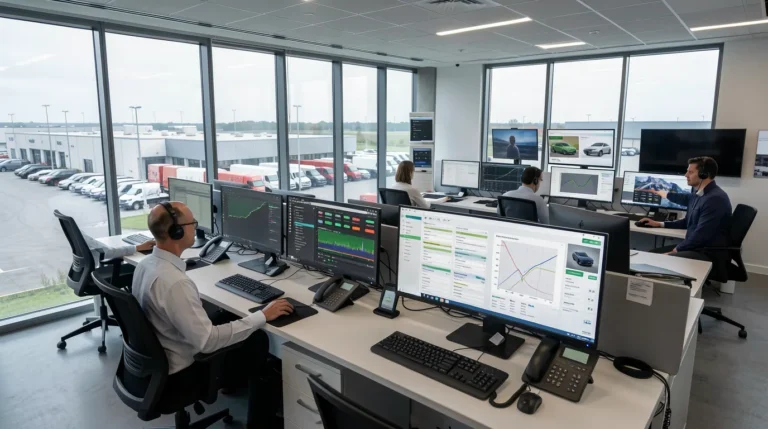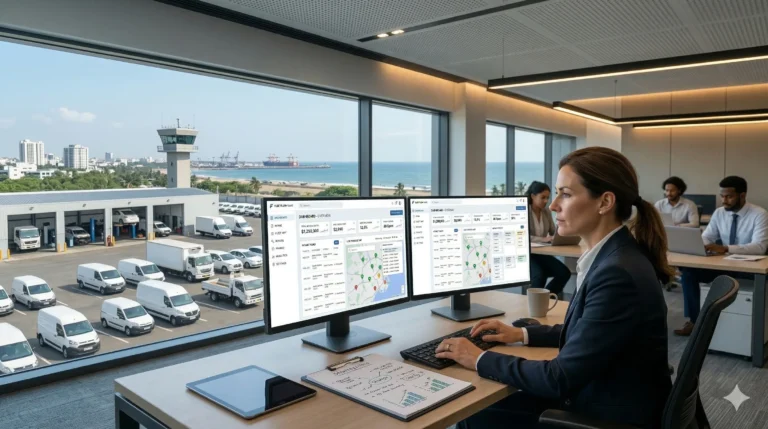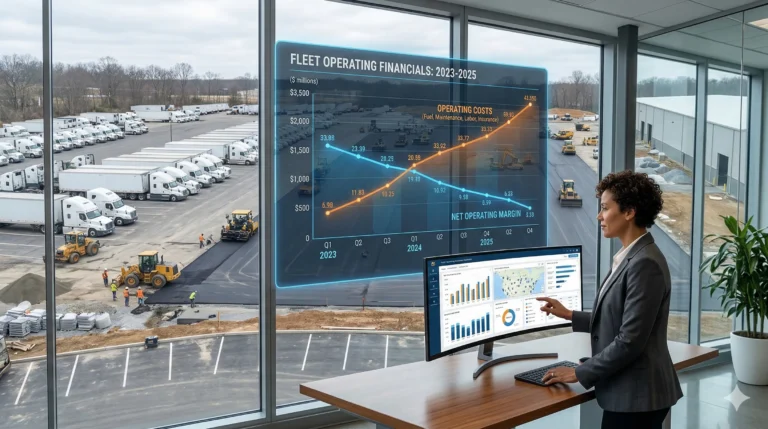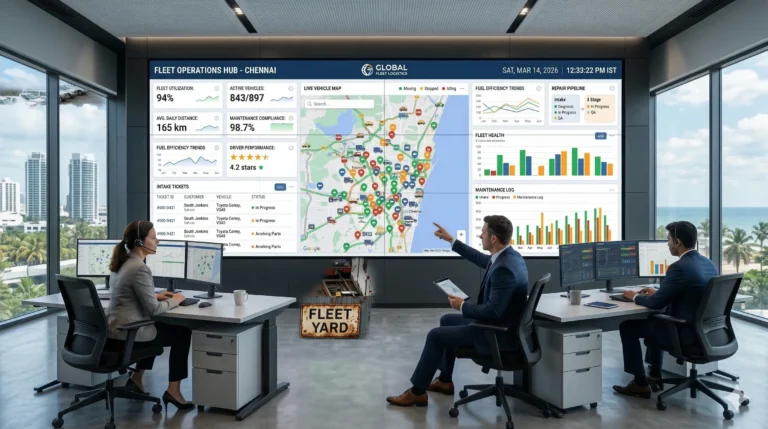
Every successful rental company dreams of fleet expansion. However, there comes a pivotal moment when operational processes struggle to keep pace—a phenomenon best described as the “coordination chaos stage.” This is a critical juncture where business growth is not the root cause of disorder; rather, fragmented workflows become the true culprit. As fleet size increases, so does the complexity of coordination, often outstripping the capabilities of legacy systems and manual processes. The result? A perfect storm of inefficiency, frustration, and lost opportunity.
The Early Warning Signs
While growth is a sign of achievement, it also brings early signals that chaos is brewing beneath the surface. Notably, internal follow-ups between teams spike as staff attempt to track vehicle status or clarify assignments. Consequently, repeated customer complaints emerge, often centered around delayed responses or mismatched bookings. Drivers, caught in the confusion, find themselves calling dispatch multiple times for clarifications or updates. Moreover, workshop delays become increasingly common, as vehicles pile up waiting for maintenance or repairs.
It’s crucial to recognize that operational density—the number of handoffs, tasks, and interactions per vehicle—increases in complexity at a rate far faster than simple vehicle count. As a result, even a modestly growing fleet can suddenly experience outsized coordination challenges.
Intake Breakdown — Where Chaos Begins
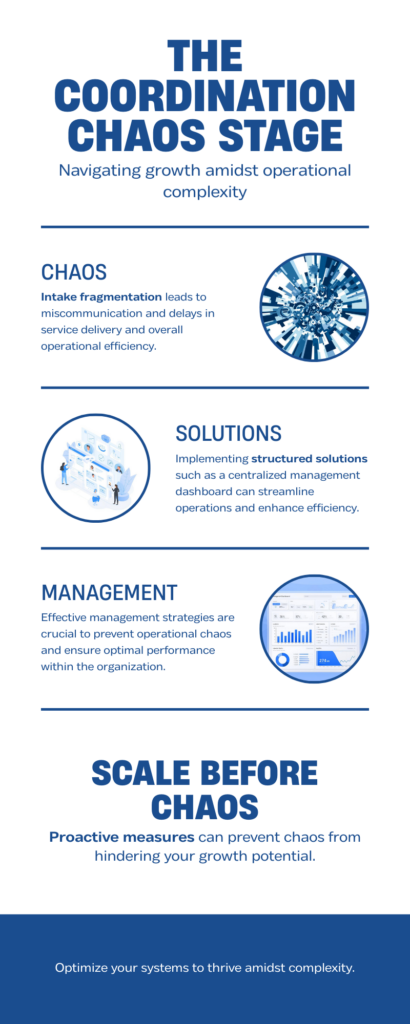
The genesis of coordination chaos typically lies in intake fragmentation. When customer requests and internal instructions arrive through disparate channels—calls, WhatsApp messages, emails—no single source of truth exists. Urgent breakdowns become entangled with routine booking requests, making prioritization nearly impossible. The absence of structured classification means that critical issues are not escalated promptly, while minor tasks may receive undue attention. Delayed routing and unclear ownership further compound the confusion.
However, companies that implement a structured CRM intake system can prevent this downward spiral. By categorizing requests and activating urgency triggers, organizations ensure that the right teams respond to the right issues at the right time. Consequently, escalations are minimized and operational flow is restored.
Traffic & Driver Allocation Overload
As fleet activity intensifies, traffic and driver allocation processes are often the next to unravel. Double vehicle assignments become commonplace, resulting in operational inefficiencies and customer dissatisfaction. Replacement vehicle shortages further strain resources, while movement visibility gaps prevent teams from accurately tracking fleet locations. This leads to missed pickup times and dissatisfied clients.
Therefore, the introduction of centralized traffic dashboards and resource allocation workflows is paramount. These systems provide real-time visibility, prevent double bookings, and streamline driver assignments. Ultimately, they transform a chaotic environment into a well-orchestrated operation.
Workshop Bottlenecks
When intake and allocation processes are already under stress, workshop bottlenecks quickly follow. Vehicles sit idle, waiting for quotation approvals, while the repair lifecycle is not tracked systematically. Idle days increase, impacting overall fleet availability and revenue. Moreover, customers are left in the dark, receiving inaccurate or delayed updates about their vehicle status.
Structured workshop tracking and approval systems address these issues by providing end-to-end transparency. Approvals are expedited, repair progress is monitored, and customers receive timely updates. Consequently, fleet downtime is minimized and customer satisfaction improves.
Financial Blind Spots Intensify Chaos
Operational chaos is compounded when financial oversight lags behind. As fleets grow, so do fuel and toll claims, creating more complex reimbursement processes. Driver incentive schemes become difficult to manage, while profit per vehicle becomes increasingly opaque. Approvals slow due to budget uncertainty, causing further delays and missed opportunities.
In this context, profitability tracking systems serve as essential stability infrastructure. By providing clarity on costs, revenue, and margins at the vehicle level, these systems empower managers to make informed decisions and sustain growth without sacrificing profitability.
FAQ: Navigating the Coordination Chaos Stage
It’s the operational tipping point where fragmented processes and communication overload lead to inefficiency, delays, and customer dissatisfaction, typically triggered by rapid fleet growth.
The chaos can begin as early as 50–100 vehicles, depending on process maturity and system integration, not just raw vehicle count.
When requests are scattered across multiple channels, messages get lost or delayed, resulting in slow response times and more customer frustration.
Vehicle downtime increases, leading to scheduling conflicts, lost revenue, and dissatisfied clients—all of which ripple back through the organization.
Not effectively. More staff can help temporarily, but without structured workflows and systems, underlying inefficiencies remain and costs rise.
Conclusion
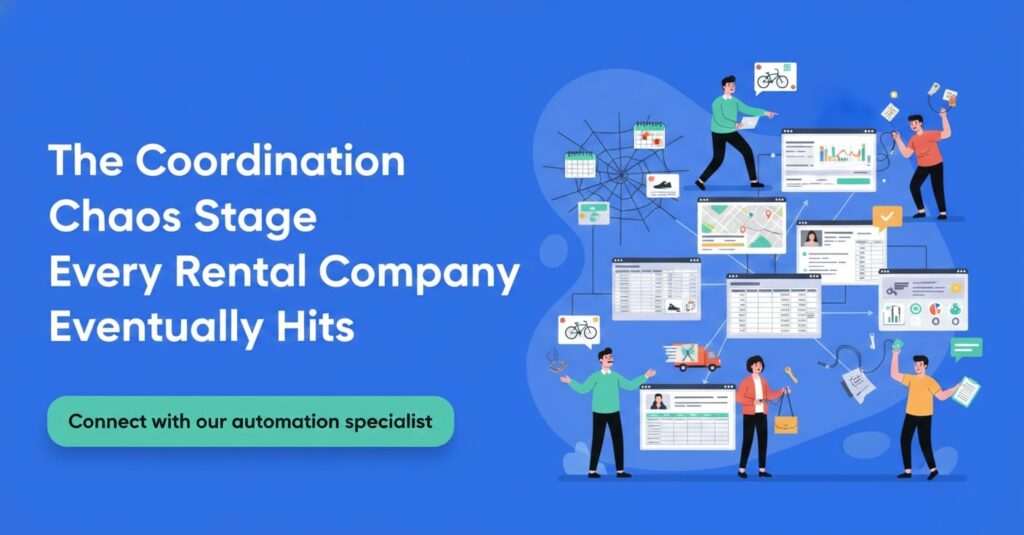
Ultimately, coordination chaos is an inevitable phase for any growing rental company. However, collapse is optional. Businesses that proactively implement structured workflows—spanning intake, traffic, workshop, finance, and dashboard reporting—transform operational chaos into a foundation for predictable, sustainable scale. The strategic imperative is clear: scale your systems before you scale your fleet, laying the groundwork for growth that is both controlled and profitable.