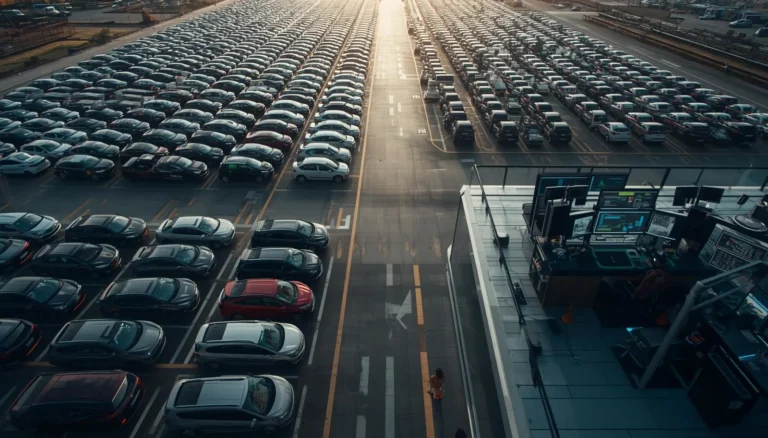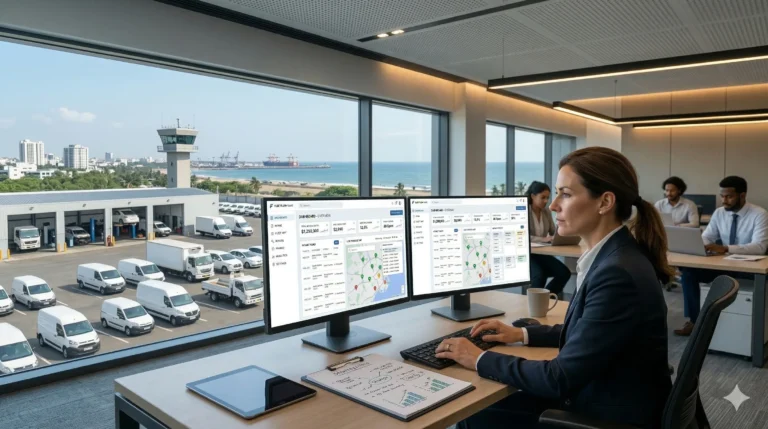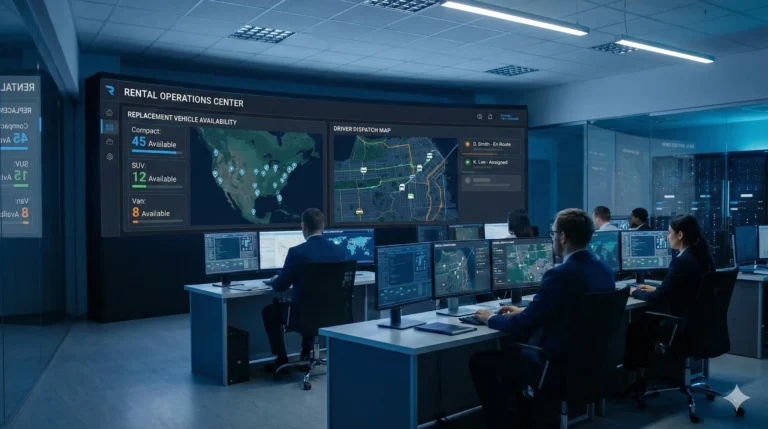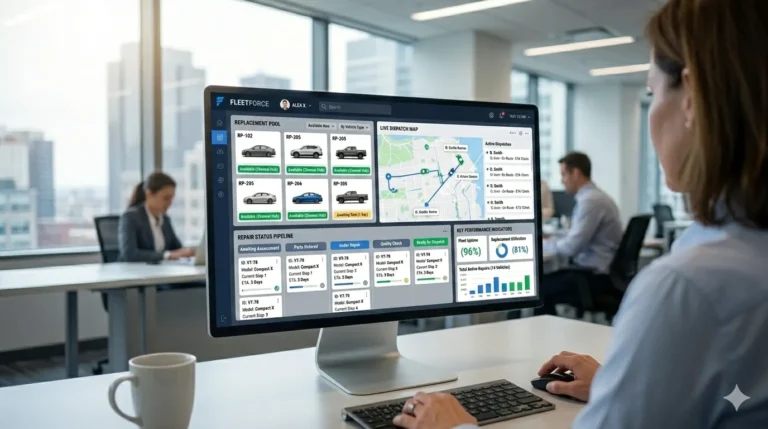
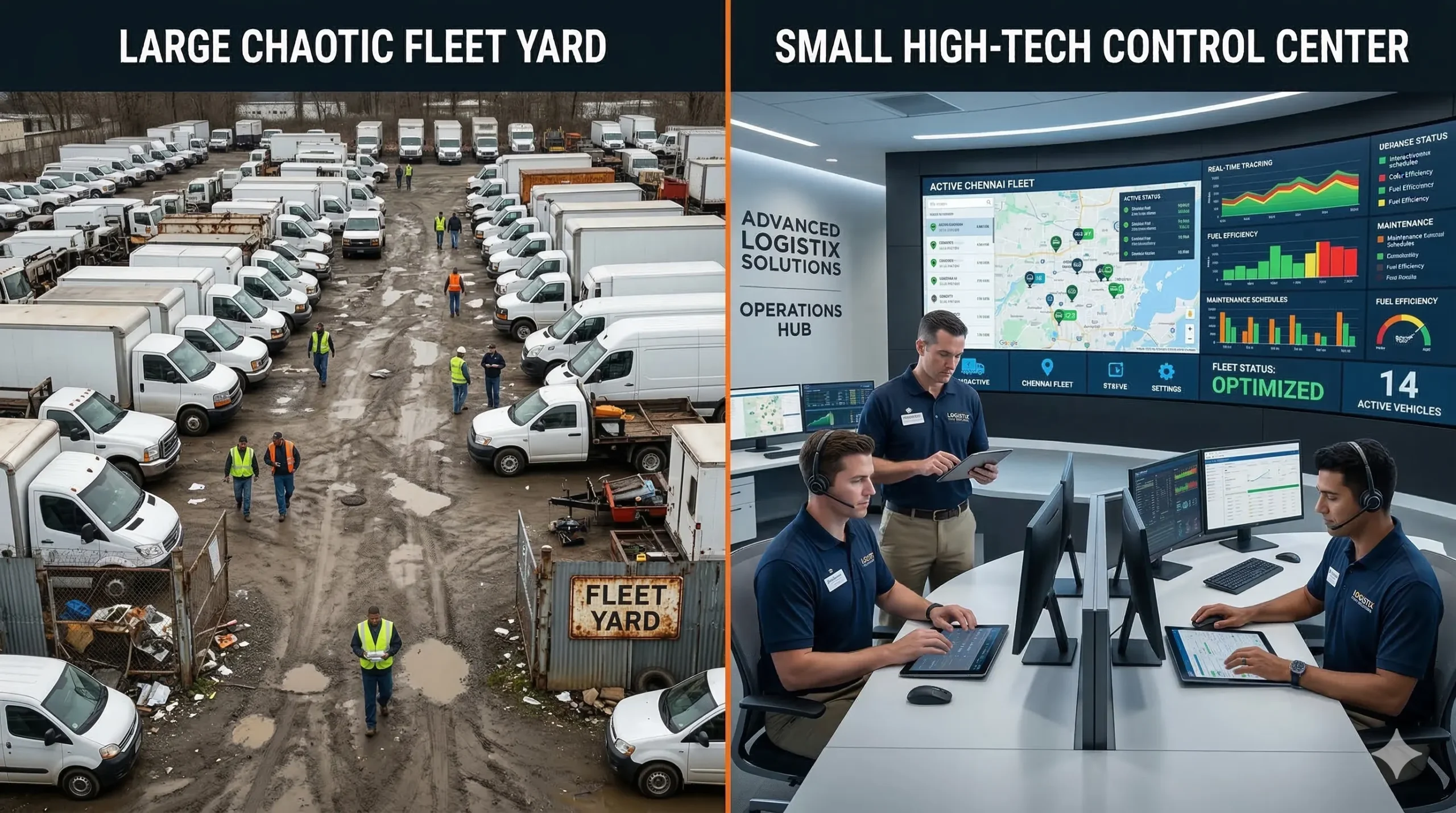
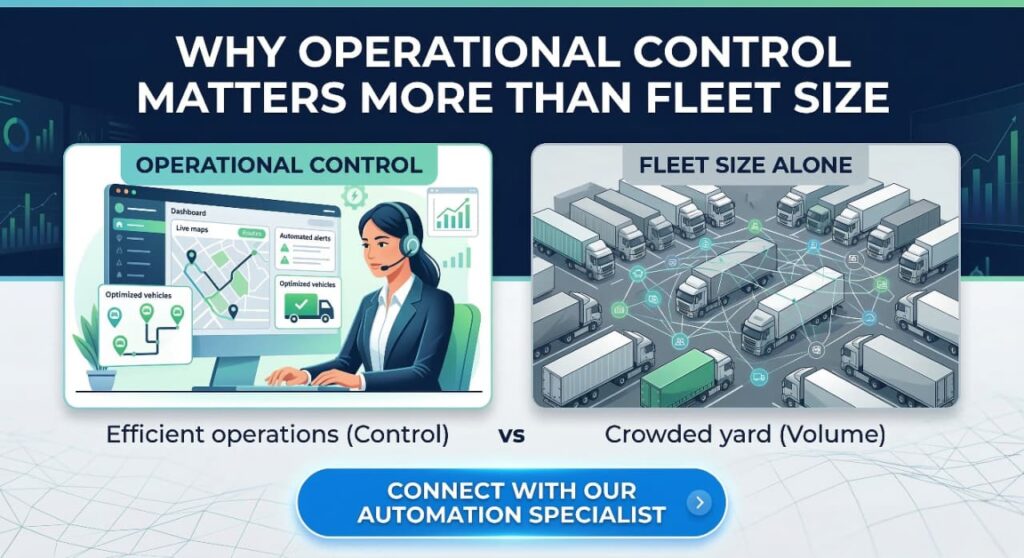
Operational control matters more than fleet size because inventory alone does not generate profit — utilization does. As rental companies scale, fleet growth increases complexity. Without structured operational control, growth amplifies inefficiencies rather than generating revenue. In essence, control converts capacity into profitability, transforming what could be an idle asset pool into a consistent profit engine.
Fleet Size Measures Capacity, Not Performance
Adding more vehicles to your rental fleet increases the potential for revenue. However, the pressure to coordinate operations also rises. Each additional vehicle introduces a new layer of complexity, including more service cycles to manage, increased exposure to accidents, and higher replacement demand when vehicles go offline.
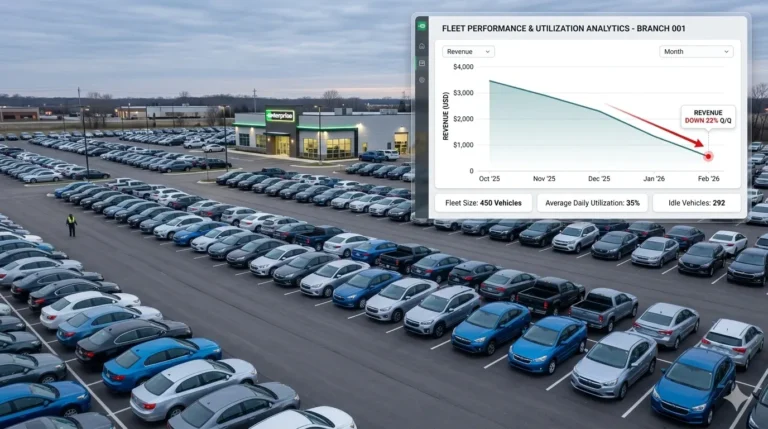
Consequently, scale without structure magnifies operational noise. As the fleet grows, so does the volume of exceptions, unplanned downtime, and administrative overhead. Notably, larger fleets can mask inefficiencies that erode profit margins. While fleet size expands capacity, it does not guarantee performance or profitability. In fact, unchecked expansion often leads to diminishing returns, as the business struggles to maintain visibility and control across a sprawling asset base.
Utilization Is the Real Profit Lever
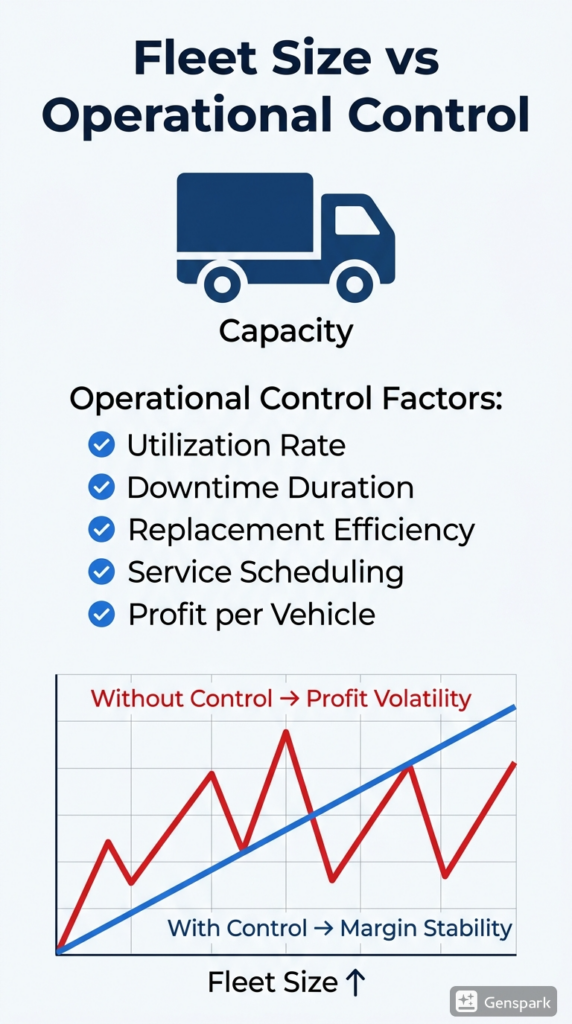
Ultimately, utilization—not fleet size—drives rental profitability. The core formula is simple:
Revenue Per Vehicle = Utilization × Rate × Time
A 5–10% improvement in utilization can often outpace the revenue gains from expanding the fleet itself. For example, increasing average utilization from 70% to 77% across a 100-vehicle fleet is financially superior to adding 10 more vehicles at 70% utilization. Moreover, higher utilization means capital invested in inventory delivers greater returns.
Idle days are silent profit killers. Vehicles that sit unused not only fail to generate income but also accrue holding costs. Downtime expansion—caused by workshop bottlenecks, slow approvals, or replacement delays—exacerbates this problem. Each day a vehicle is unavailable compounds replacement strain and extends workshop queues. Operational control acts as a utilization stabilizer, ensuring that assets return to revenue-generating status as quickly as possible.
Downtime Compression Determines Margin
Downtime is not a single event but a cycle:
- Accident/Service Trigger
- Recovery Delay
- Workshop Queue
- Approval Lag
- Replacement Conflict
- Redeployment Gap
Each phase introduces its own latency and risk. For instance, after a service trigger, a recovery delay can push the vehicle further down the workshop queue. If approval processes lag, the entire cycle stalls. Replacement conflicts—where suitable spare vehicles are unavailable—further constrain revenue.
However, robust operational control compresses every stage of this cycle. By tracking triggers in real time, automating approvals, prioritizing workshop scheduling, and planning replacements proactively, companies minimize non-revenue intervals. The result is shorter downtime, higher utilization, and protected margins, regardless of fleet size.
Fragmented Data Reduces Decision Speed
In many rental operations, core workflows are tracked in isolation. Intake is managed through one system (or spreadsheet), dispatch in another, and workshop status in yet another. Finance teams often reconcile data weekly—by which point, actionable insights are lost.
This fragmentation reduces decision speed. When data is siloed, executives operate with incomplete or outdated information. Slow reaction times lead to missed revenue opportunities, delayed redeployments, and margin erosion. Moreover, the lack of real-time visibility makes it nearly impossible to spot emerging bottlenecks or utilization dips before they impact performance.
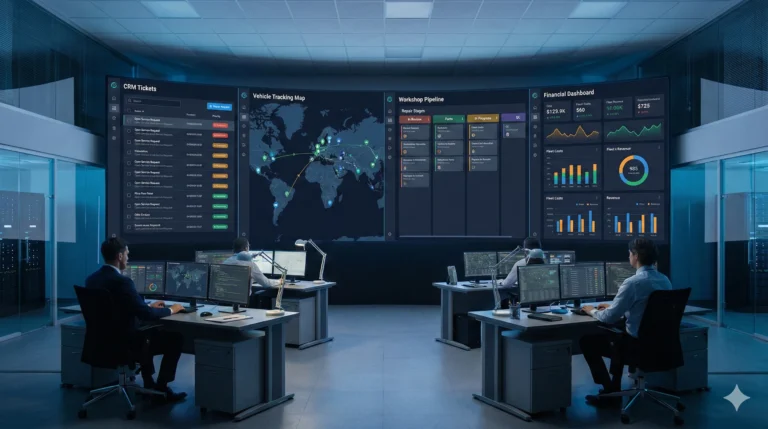
Real-time dashboards accelerate decision-making. They unify intake, traffic, workshop, replacement, and finance data into a single interface. As a result, operations leaders can detect issues early, adjust allocations dynamically, and optimize workshop loads—all of which drive utilization and reduce unnecessary downtime.
System Architecture Enables Sustainable Scale
Sustainable scaling is not just about adding more vehicles. It requires a structured operational loop that automates and synchronizes every step of the rental workflow:
- Automated Intake Classification: Instantly categorizes new bookings or returns for efficient routing.
- Live Allocation Visibility: Provides real-time insights into vehicle locations and assignment status.
- Workshop Lifecycle Tracking: Monitors progress through service, repair, and readiness stages.
- Replacement Planning: Forecasts and allocates backup vehicles to cover unplanned outages.
- Cost Logging: Captures every expense tied to the vehicle lifecycle for accurate margin tracking.
- Unified Dashboard: Centralizes operational and financial KPIs for executive oversight.
This architecture reduces manual overhead and increases margin stability. By embedding operational control into each workflow phase, rental companies ensure that scaling the fleet does not dilute performance. Instead, every asset is managed as part of a closed-loop system, where data flows seamlessly and exceptions are addressed proactively.
Frequently Asked Questions
Operational control turns capacity into profit. Without it, adding vehicles only multiplies management challenges and inefficiencies. Control ensures every asset is actively contributing to revenue, stabilizes utilization, and prevents margin leakage.
Utilization measures how often a vehicle generates income. Higher utilization means each asset spends less time idle, increasing revenue per vehicle and improving return on investment. Even modest utilization gains can outperform the impact of expanding fleet size.
No. If underlying processes are inefficient, a larger fleet amplifies existing problems. More vehicles mean more complexity, downtime, and overhead. Profitability improves when operational control increases utilization and compresses downtime, not simply by adding capacity.
Downtime expands due to delays at each operational stage—service triggers, slow recovery, workshop bottlenecks, approval lags, replacement shortages, and redeployment gaps. Fragmented data and manual workflows make these delays longer and less visible.
Proactive replacement planning ensures vehicles taken offline for service or accidents are swiftly substituted with ready spares. Without it, utilization drops as assets sit idle waiting for replacements, directly reducing revenue per vehicle.
Conclusion
Fleet size increases capacity. Operational control determines performance.
Rental companies that scale structure alongside fleet size maintain higher utilization, protect margins, and reduce operational volatility. Inventory alone does not generate profit—operational discipline turns growth into sustainable profitability.