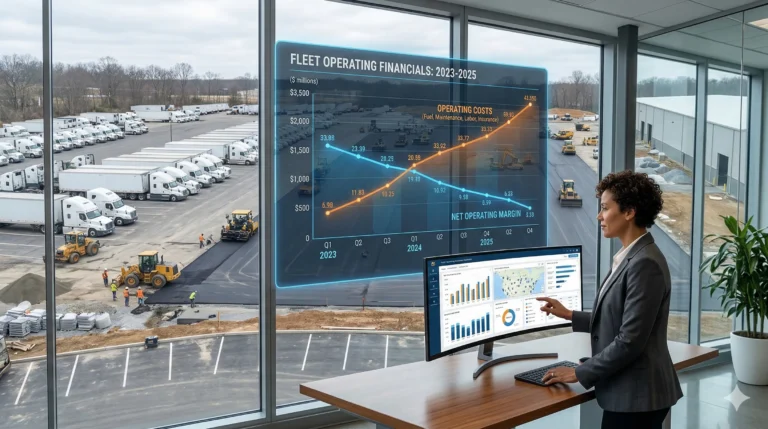
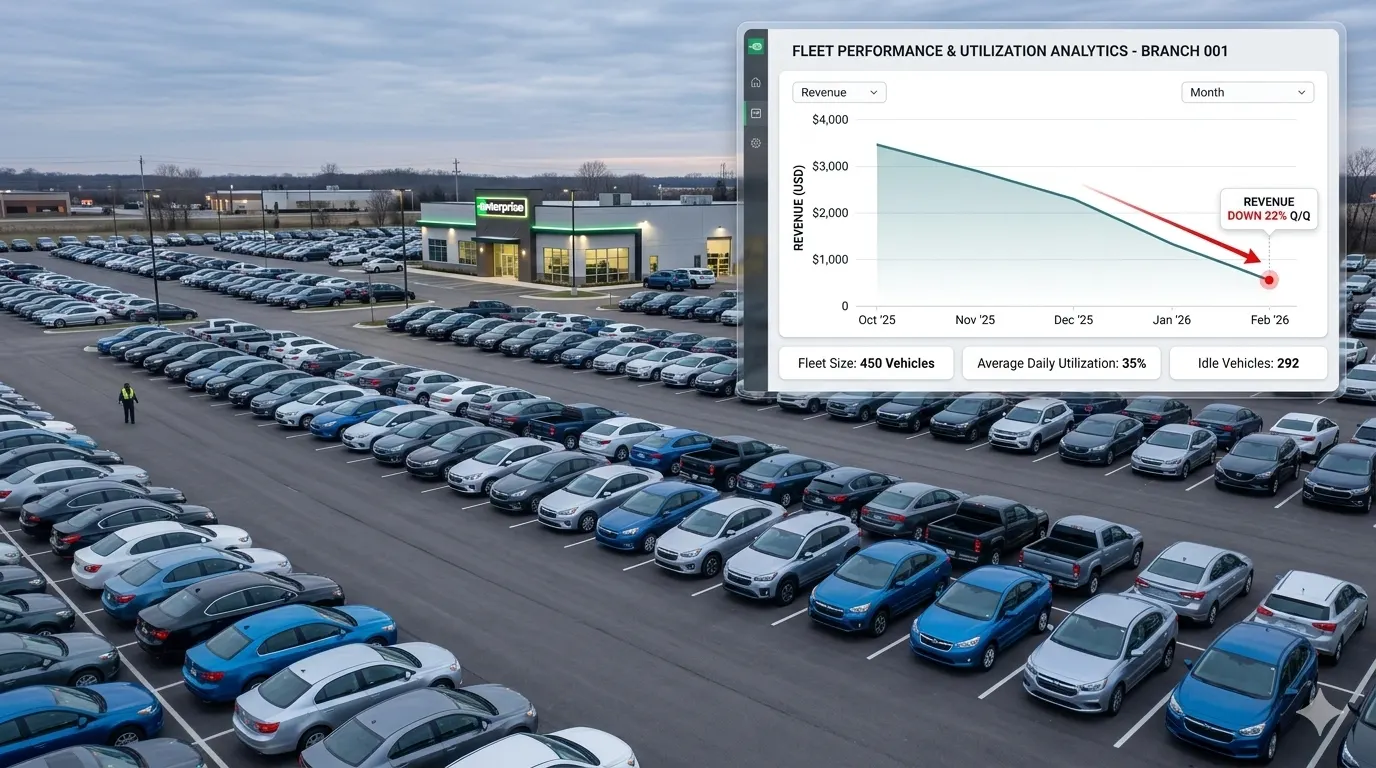
Rental companies lose revenue without realizing it not because of poor demand, but because of operational blind spots. As fleets grow, small inefficiencies across intake, allocation, workshop, replacement, and financial tracking quietly compound into measurable profit leakage. Ultimately, the most significant threat to profitability is not a sudden downturn in business, but rather the silent, cumulative effect of overlooked inefficiencies.
Idle Vehicles Hidden in Plain Sight
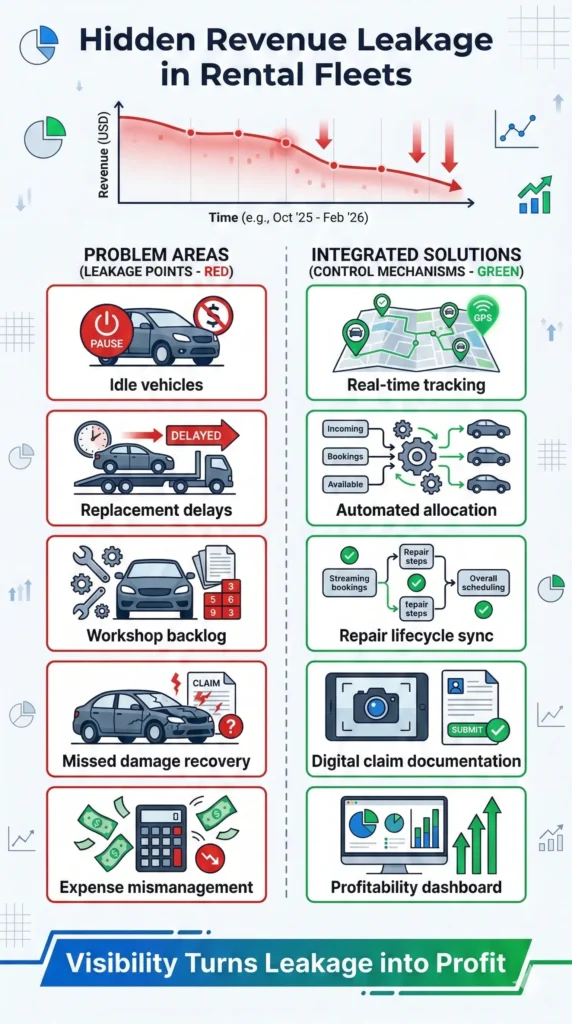
Idle vehicles are one of the most persistent—and underestimated—sources of revenue loss for rental companies. Vehicles waiting for workshop approval, delayed replacement allocation, and poor scheduling synchronization all contribute to fleet downtime. Moreover, when downtime is not tracked at the individual vehicle level, these idle days silently reduce revenue per asset. Consequently, a vehicle that sits unused for just a few days each month translates to thousands in lost annual revenue. Notably, the scale of this issue increases exponentially with fleet size, making it imperative to address idle time proactively.
Replacement Allocation Inefficiency
Replacement allocation is another area where inefficiency eats into profits. Double booking, geographic imbalances, late dispatches, and manual availability tracking are common operational pitfalls. Consequently, misallocation often results in lost rental days that directly impact topline revenue. Moreover, the lack of a real-time, centralized tracking system leads to preventable delays and missed opportunities, especially during peak demand windows. Therefore, automating allocation and dispatch processes is no longer optional but essential for optimizing asset utilization.
Missed Damage & Claim Recovery
Missed damage and claim recovery represent a hidden drain on profit margins. Incomplete photo documentation, delayed damage logging, and poor accident reporting workflows frequently result in unrecovered claim costs. Moreover, without structured documentation, rental companies struggle to hold drivers or customers accountable. Consequently, even minor lapses in documentation or reporting can cascade into significant financial losses over time. Positioning structured, timely documentation as a core revenue protection strategy is, therefore, critical for sustained profitability.
Fuel, Toll & Incentive Leakages
Financial leakages related to fuel, toll, and incentives often fly under the radar. Manual claim approval, reimbursement gaps for drivers, incentive miscalculations, and delayed expense logging all contribute to revenue erosion. Moreover, these small inconsistencies multiply at scale, especially in larger fleets. Consequently, companies relying on manual or fragmented processes struggle to maintain financial discipline, inadvertently allowing profit to slip through the cracks. Therefore, digitizing and automating these financial workflows is vital to minimize leakage and improve overall cost control.
Data Lag & Decision Errors
Data lag is a silent but formidable adversary. Spreadsheet-based reporting, delayed utilization metrics, unclear profit per vehicle, and inaccurate run-rate assumptions all hinder effective decision-making. Consequently, when leaders rely on outdated or incomplete data, they make decisions that fail to reflect the current operational reality. Moreover, this lag means revenue opportunities are missed and corrective actions are delayed. Therefore, real-time data visibility is directly correlated with revenue protection. Decision lag equals revenue lag.
Frequently Asked Questions
Most revenue is lost through operational inefficiencies—idle vehicles, misallocated replacements, missed damage claims, and delayed financial tracking—not from lack of demand.
Idle vehicles generate no revenue while incurring ongoing costs. Each day a vehicle sits unused is a direct hit to revenue per asset and overall fleet profitability.
Hidden costs arise from manual processes, incomplete documentation, delayed reporting, and fragmented financial workflows. These small gaps, when multiplied across a fleet, cause significant leakage.
Inefficient allocation leads to double bookings, geographic mismatches, and late dispatches, all of which result in unnecessary downtime and lost rental days.
Yes. Automation minimizes manual errors, accelerates workflows, and provides real-time visibility, thereby reducing inefficiencies and protecting revenue.
Conclusion
Revenue loss rarely appears as a single large mistake. It appears as small operational gaps repeated daily. Rental companies that integrate intake, allocation, workshop, and finance into one synchronized system convert hidden leakage into measurable profit.
If you cannot see it in real time, you are probably losing it.