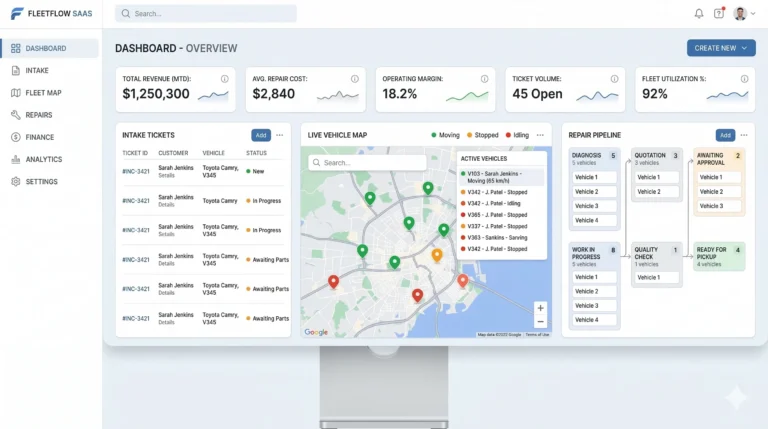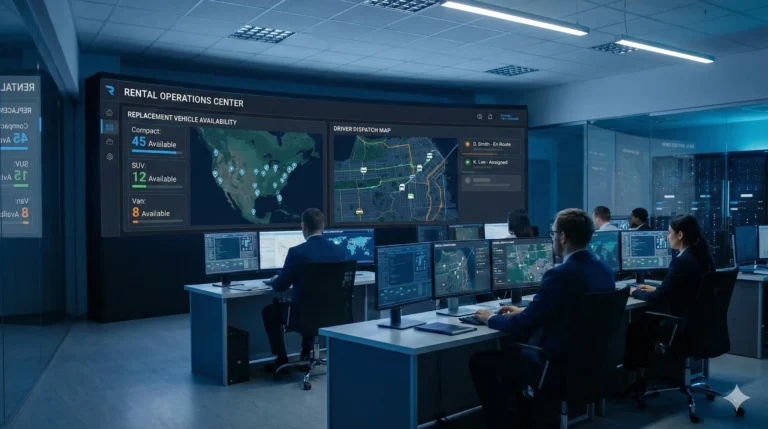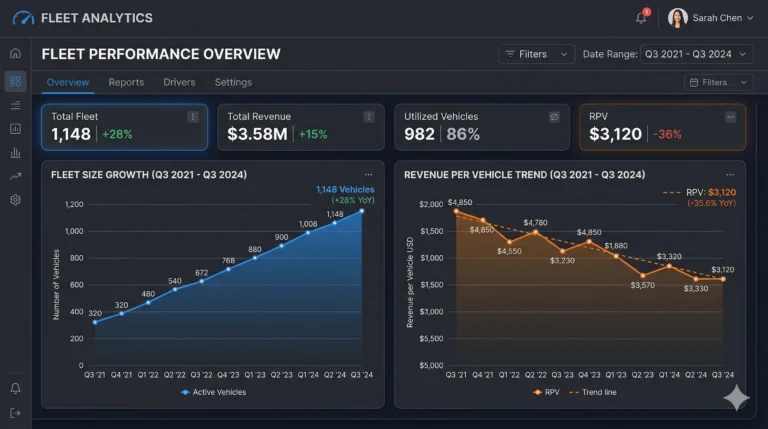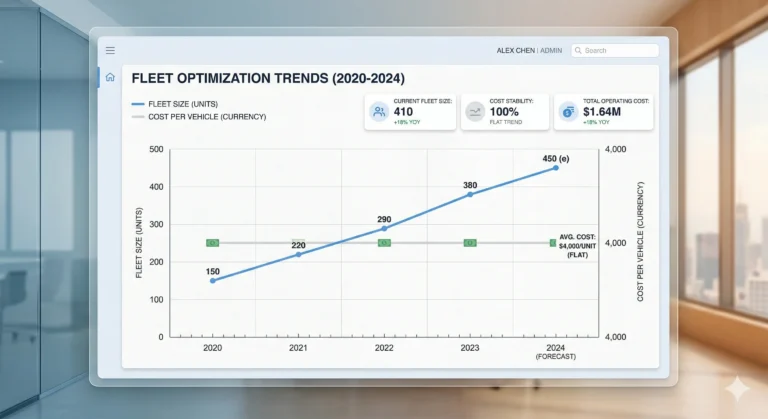
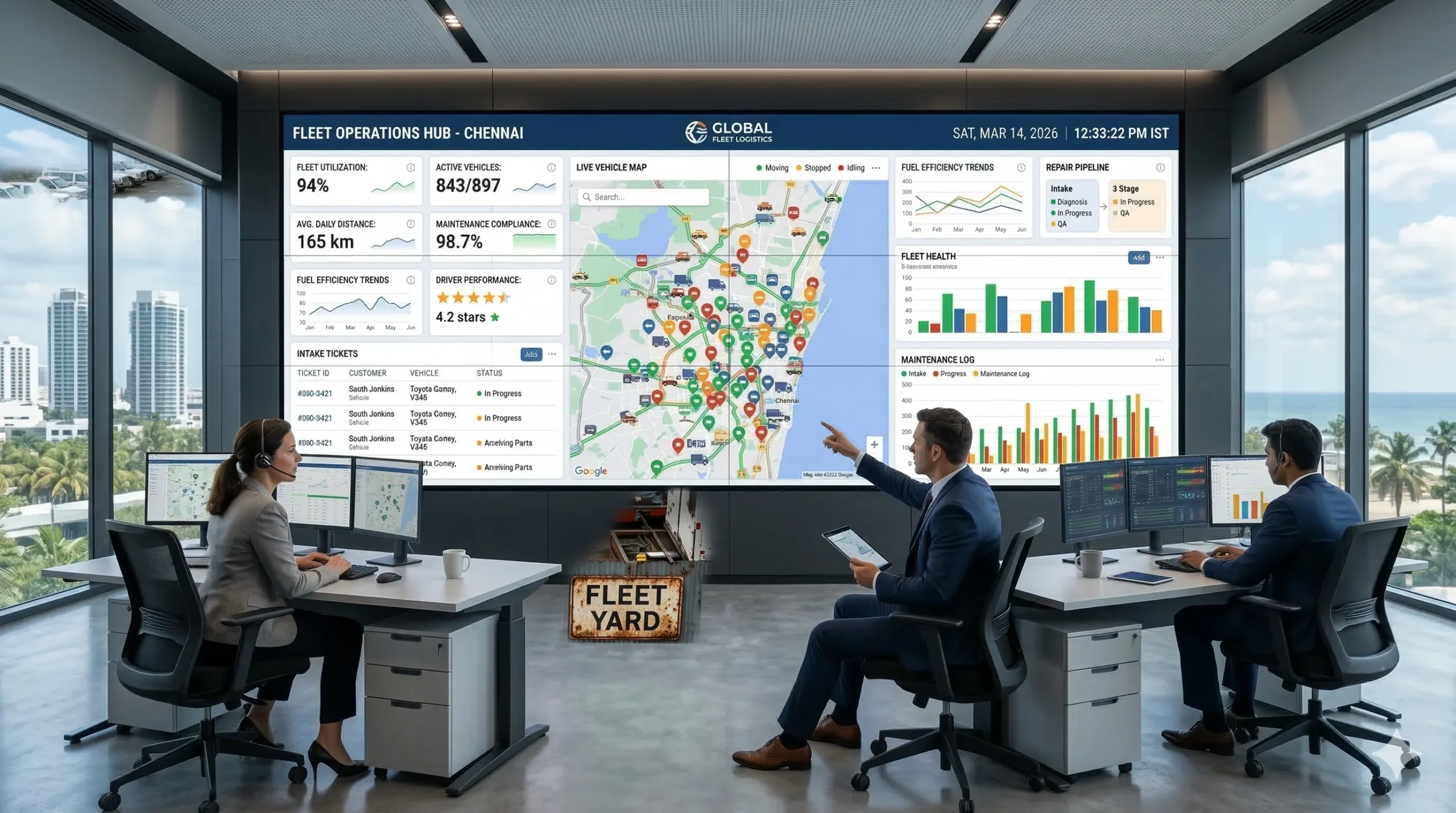
Mature fleet companies manage coordination differently because they rely on structured systems instead of manual communication. While growing fleets depend on phone calls and spreadsheets, mature fleets synchronize intake, allocation, workshop, and finance in real time. This system-driven approach does not simply replace old processes—it fundamentally reshapes how vehicles, people, and data flow across the business. The result is less friction, faster reaction to disruptions, optimized utilization, and more stable margins. This article breaks down the operational workflow model that underpins mature fleet management: Intake → Traffic Allocation → Workshop Lifecycle → Replacement Planning → Finance → Unified Dashboard.
Structured Intake Instead of Reactive Routing
Emerging fleets typically field requests through ad hoc channels—phone calls, emails, or even instant messages. Consequently, intake is fragmented, and routing decisions become guesswork. In contrast, mature fleet companies invest in automated ticket creation. Every request—be it a booking, maintenance alert, or incident—is logged instantly and assigned a unique identifier.
Moreover, urgency classification is built into the process. Automated systems assess the priority of requests, flagging high-impact issues for immediate attention. As a result, critical tickets never languish in a shared inbox or depend on someone’s memory.
Direct routing ensures that each ticket reaches the correct team or individual, eliminating multi-step handoffs that create unnecessary delays. Every stage of the intake is recorded in a centralized communication log, providing a complete audit trail. Therefore, mature fleets eliminate routing friction at the source, reducing the risk of missed assignments and late responses. Structured intake transforms intake from a bottleneck into an accelerator for downstream processes.
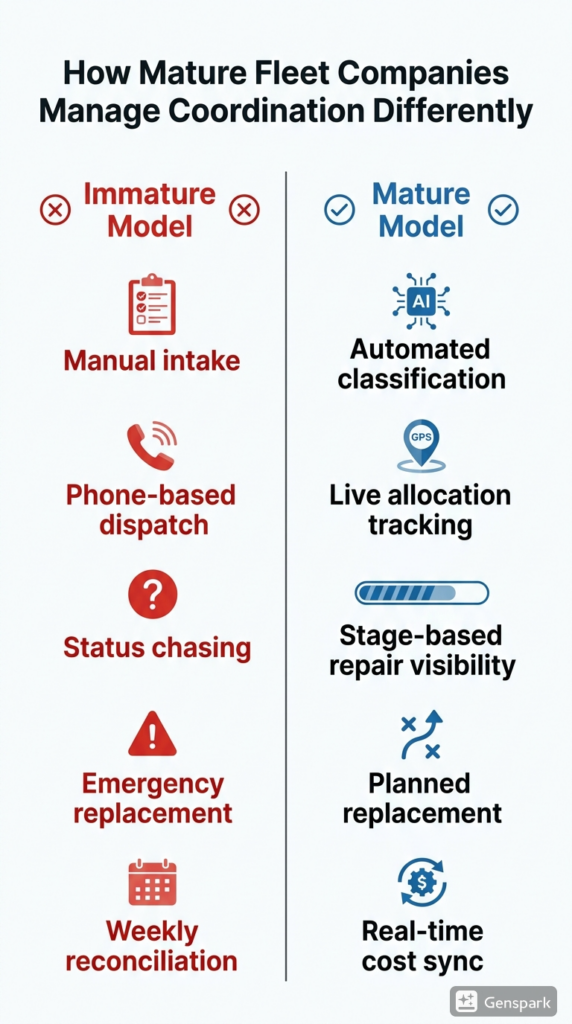
Live Allocation Instead of Manual Dispatch
Fleet managers in less mature organizations often rely on manual dispatch boards, static spreadsheets, and periodic check-ins with drivers. These methods invite double bookings, idle time, and human error. Mature fleets, on the other hand, leverage real-time vehicle availability dashboards. As soon as a vehicle becomes free or a new assignment arises, the system updates availability in real time.
Additionally, driver tracking integrates GPS and telematics data, displaying every operator’s current location and status. If a scheduling conflict or resource shortage emerges, conflict alerts immediately notify the operations team. Furthermore, automated replacement triggers activate when vehicles are delayed, damaged, or otherwise unavailable, ensuring that customer commitments are met without manual intervention.
By reducing manual touchpoints, mature fleets prevent double booking and minimize idle assets. Live allocation enables the company to optimize utilization continuously, rather than reactively resolving issues after the fact.
Workshop Transparency Instead of Status Chasing
When a vehicle enters the workshop, less mature fleets often lose visibility. Operations teams must chase down updates, call technicians, and struggle to forecast return dates. By contrast, mature fleets deploy stage-based repair tracking. Every vehicle moves through predefined repair stages—diagnosis, parts order, repair, inspection, and ready-for-release—each stage timestamped and visible to all stakeholders.
Approval workflow automation accelerates decision-making, automatically routing quotes and approvals to the relevant stakeholders. Ready-date forecasting algorithms use historical repair data to predict when each vehicle will be available, feeding this information back into allocation systems.
Because all workshop activities are visible in real time, downtime is compressed. Operations no longer rely on repeated follow-ups. Instead, visibility replaces status chasing, allowing managers to focus on optimizing fleet readiness rather than tracking down updates.
Planned Replacement Instead of Emergency Allocation
Inevitably, vehicles will go off-road due to breakdowns or scheduled maintenance. In less mature fleets, this often triggers last-minute scrambles, with urgent calls to find replacements. Mature fleets, however, automate off-road detection using on-board diagnostics and telematics.
Simultaneously, replacement pool forecasting predicts future demand for replacement vehicles based on historical usage, maintenance cycles, and seasonal trends. This allows fleet managers to pre-position vehicles and resources. Priority segmentation assigns higher value or mission-critical bookings to the most reliable vehicles, while lower-priority assignments can flexibly use the remaining pool.
Finally, redeployment sync ensures that vehicles returning to service are automatically considered for upcoming assignments. This proactive approach protects utilization and reduces the risk of revenue loss due to unavailable vehicles.
Financial Synchronization Instead of Monthly Reconciliation
In many organizations, finance operates one step removed from operations. Costs are only reconciled at month’s end, and revenue per vehicle remains opaque. Mature fleets, in contrast, push for real-time cost logging. Every transaction—fuel, repairs, tolls, or fines—is recorded as it occurs.
Incentive automation drives behavioral alignment by linking driver or team bonuses to real-time operational metrics such as uptime or cost efficiency. Revenue per vehicle visibility is maintained through integrated booking and billing systems, while margin per asset tracking enables granular analysis of profitability by vehicle, customer, or segment.
This level of financial synchronization transforms finance from a reporting function into live intelligence. Decision-makers can spot margin erosion or utilization dips instantly, allowing for rapid corrective action.
Unified Dashboard Control Layer
Ultimately, the operational workflow converges in a single source of truth—the unified dashboard. This control layer aggregates data from intake, allocation, workshop, replacement, and finance, presenting it in a role-specific view for each stakeholder.
KPI alerts notify executives of deviations from target metrics, while performance benchmarking tracks progress against historical baselines or peer groups. Above all, executive oversight is enhanced by real-time visibility into every aspect of the fleet operation.
Because the unified dashboard reduces the need for status meetings and ad hoc reporting, decision acceleration becomes the new norm. Leaders move from reactive problem-solving to proactive strategy execution.
FAQ
Operational maturity is defined by the deployment of structured, system-driven workflows that enable real-time coordination, visibility, and control across all aspects of the fleet. Mature companies minimize manual intervention, synchronize data, and accelerate decision-making.
By automating intake, allocation, workshop tracking, and financial reporting, mature fleets eliminate redundant communication, handoffs, and status checks. This reduces latency and friction throughout the operational workflow.
Manual systems rely on human memory, isolated spreadsheets, and reactive communication. As fleet size and complexity increase, these methods introduce delays, errors, and missed opportunities, leading to inefficiency and revenue loss.
Proactive replacement planning ensures that backup vehicles and resources are available before they are needed. This prevents downtime, protects utilization rates, and secures customer commitments, all of which directly impact revenue and margins.
Key KPIs include average vehicle downtime, revenue per asset, margin per vehicle, on-time allocation rate, repair cycle time, and real-time cost tracking. Mature fleets monitor these continuously, not just at month’s end.

Conclusion
Mature fleet companies manage coordination differently because they design workflows intentionally. They compress latency, protect utilization, and stabilize margins through synchronization.
Operational maturity transforms coordination into competitive advantage.