Operations managers in fleet businesses face a formidable challenge: achieving real-time visibility across their operations. This struggle stems not from a lack of leadership or oversight, but from deep structural issues. As fleets grow, operational data becomes fragmented—scattered across intake, dispatch, workshop, and finance systems. The result is a proliferation of manual updates, disconnected tools, and operational blind spots that ultimately slow decision-making and erode profitability.
Visibility gaps are not a reflection of management skill; rather, they are the inevitable outcome of complex, siloed systems. Understanding why these gaps persist—and how to close them—is essential for any COO, operations manager, or fleet director committed to scalable, high-performance operations.
Data Fragmentation Across Departments
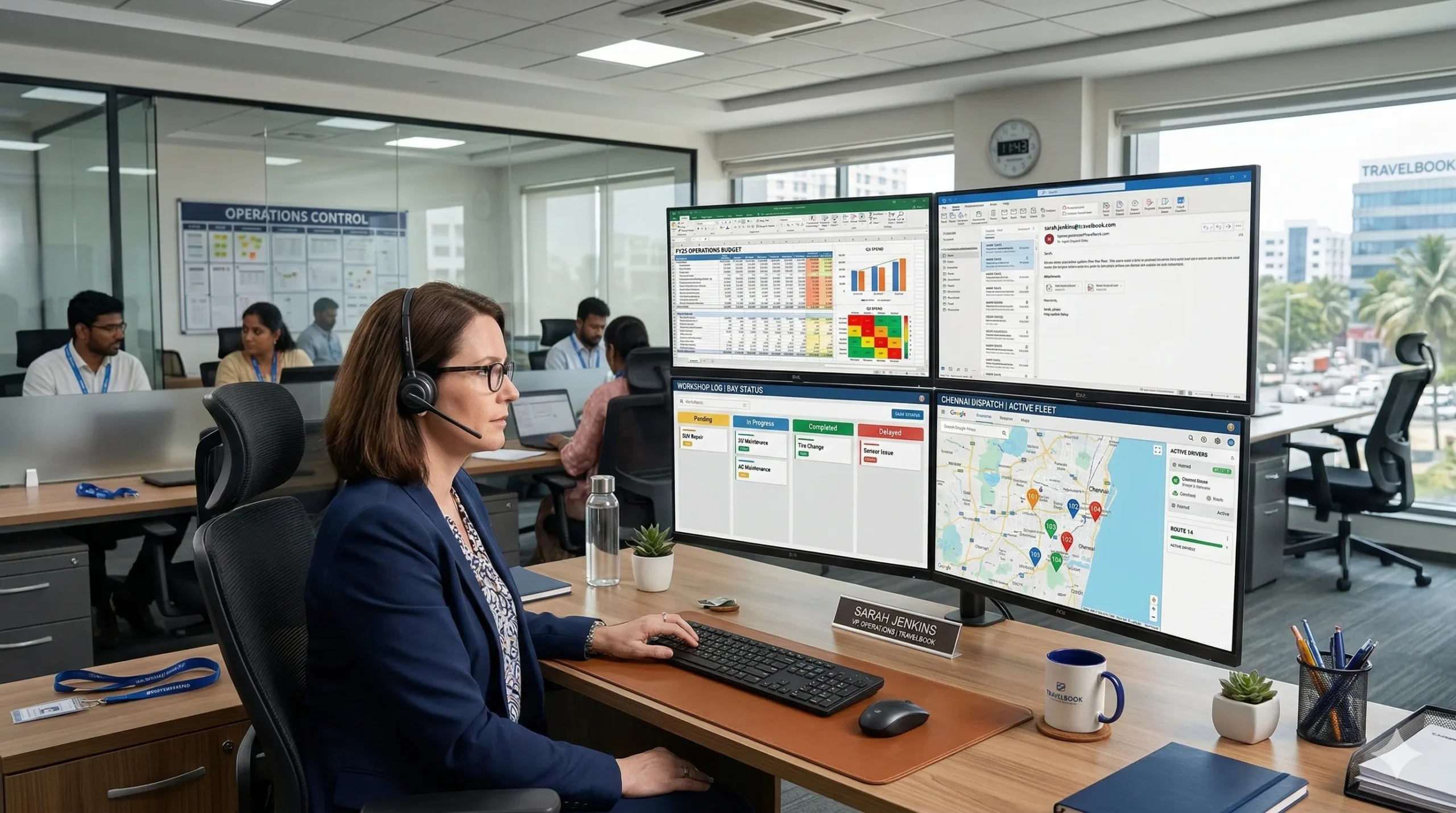
One of the most pervasive obstacles to real-time operational visibility is data fragmentation. In most growing fleet businesses, operational information is divided across multiple departments and platforms:
- Customer intake is managed in one system, often an aging CRM or a web form.
- Driver allocation happens in another, such as a dispatch board or transport management system.
- Workshop status is tracked separately, sometimes on paper or in a standalone maintenance tool.
- Financial data is usually reconciled manually in accounting software or spreadsheets.
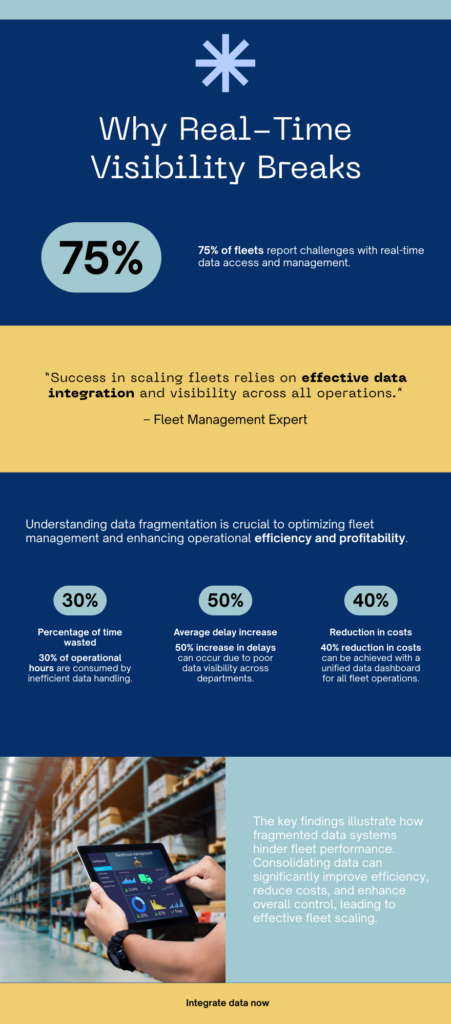
Consequently, each department maintains its own records, workflows, and KPIs. There is no single source of truth. When managers try to synthesize information—for example, to understand how a late delivery impacts workshop capacity or cash flow—they are forced to piece together disparate data sets. This fragmentation not only slows response times but also increases the risk of errors, miscommunication, and inconsistent reporting.
Moreover, as the business scales, these siloes become more pronounced. New locations, service lines, or customer segments often add more tools and processes to the mix, further muddying the operational waters.
Spreadsheet Lag vs. Live Movement
In an attempt to bridge these gaps, many operations teams rely on spreadsheets to track status updates, allocations, and costs. However, spreadsheets introduce their own set of challenges:
- Manual status updates are required, leading to inevitable delays.
- Version conflicts arise when multiple users edit the same file, often resulting in lost or overwritten data.
- Delayed data entry means the information is always slightly out of date.
- Static reporting provides only a snapshot in time, not a real-time view.
Notably, there is a critical difference between historical reporting and true operational visibility. Spreadsheets and static reports can tell you what happened last week or yesterday, but they cannot show you what is happening now. In a dynamic fleet environment—where vehicles are moving, drivers are rerouted, and customer needs shift by the minute—this lag is unacceptable.
Therefore, relying on spreadsheets for operational control is akin to driving using only the rear-view mirror. By the time an issue appears, it has already impacted performance and profitability.
Real-Time Allocation Complexity
The complexity of real-time fleet allocation only exacerbates these challenges. Consider the following operational realities:
- Driver route changes occur frequently due to traffic, weather, or customer requests.
- Replacement vehicle shifts are needed when primary vehicles are in the workshop or delayed.
- Repair stage updates must be communicated instantly to avoid unnecessary downtime.
- Geographic fleet redistribution is often required to meet demand spikes or emergencies.
Manual tools and disconnected systems simply cannot keep pace with these rapid changes. Operations managers find themselves making phone calls, sending emails, or walking the yard to verify vehicle locations. Meanwhile, the business suffers from underutilized assets, missed opportunities, and frustrated customers.
Moreover, as fleets scale, the volume and velocity of these changes increase exponentially. Without live allocation tools and synchronized status tracking, managers are forced into reactive firefighting rather than proactive optimization.
Decision Fatigue from Incomplete Data
One of the less visible, but highly consequential, effects of fragmented data is decision fatigue. Operations managers are bombarded with constant micro-decisions:
- Should a driver be rerouted or should we wait?
- Is this vehicle available or still in the workshop?
- Can we approve this expense now or is more information needed?
When data is incomplete or outdated, managers must escalate issues, seek clarifications, and postpone approvals. This escalation-driven management style delays response times, increases stress, and ultimately undermines confidence in the operation.
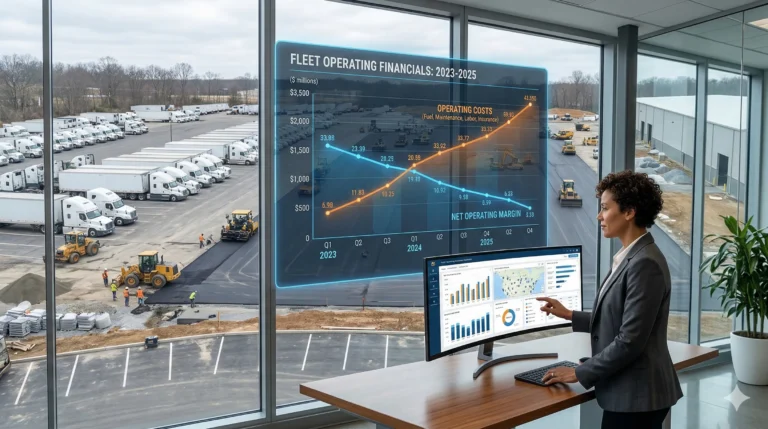
Profitability ambiguity further compounds the problem. When costs, allocations, and statuses are not synchronized, it becomes nearly impossible to track gross margins, identify inefficiencies, or forecast accurately.
Ultimately, dashboard-level synchronization is the only way to break this cycle. By providing a unified, real-time view of operations, managers can make confident decisions, reduce escalations, and focus on value-added activities.
The Real-Time Visibility Model
To restore control, fleet businesses must transition from fragmented, manual processes to an integrated, real-time visibility loop. This model consists of the following synchronized stages:
- Automated Intake: Customer requests and orders are captured electronically and immediately entered into the operational workflow.
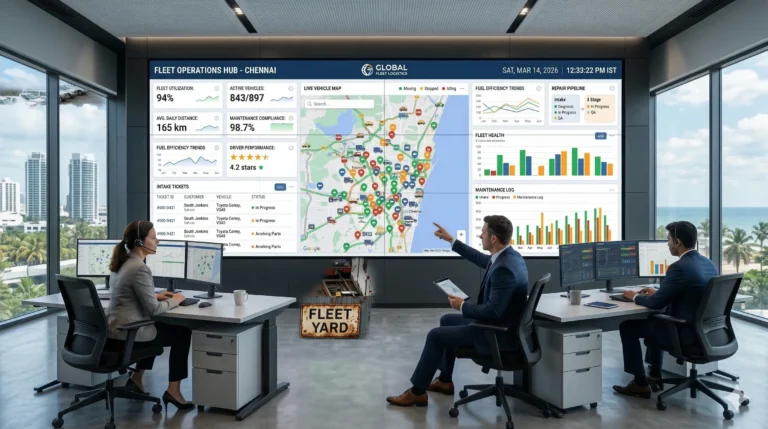
- Live Allocation: Drivers and vehicles are assigned in real time, with instant updates reflecting route changes or reassignments.
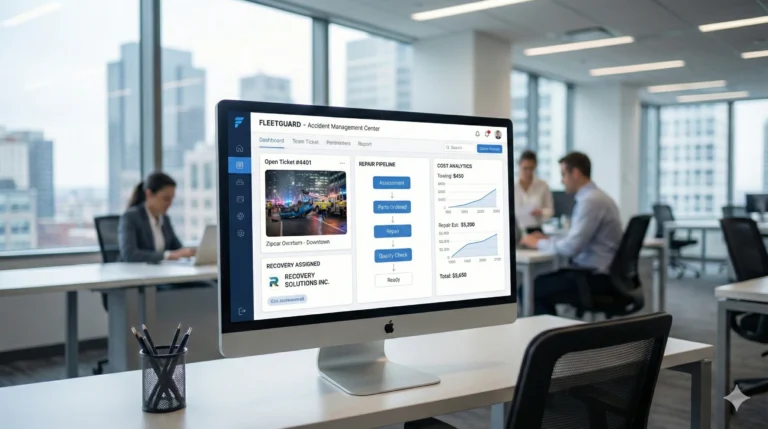
- Workshop Tracking: Maintenance and repair statuses are updated automatically, ensuring that asset availability is always current.
- Replacement Sync: Standby or replacement vehicles are tracked along with primary fleet assets for seamless substitution.
- Cost Logging: All operational costs—fuel, maintenance, labor—are logged as they occur, feeding directly into financial dashboards.
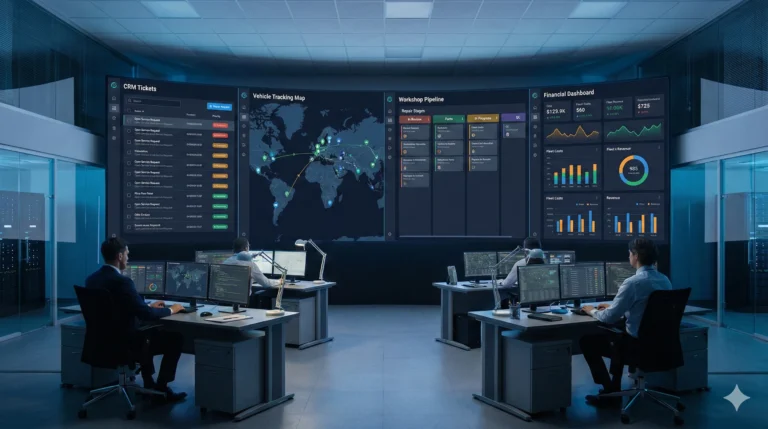
- Unified Dashboard: All data streams converge in a single, integrated dashboard, providing a live operational picture and actionable insights.
With this closed-loop model, information flows seamlessly across departments, eliminating blind spots and lag. Managers gain the ability to act—rather than react—because they can see the true state of the operation in real time.
FAQ: Real-Time Visibility in Scaling Fleets
Real-time visibility is challenging because scaling fleets often accumulate disconnected tools and processes. As operations grow, information silos develop, making it hard to maintain a unified view across intake, dispatch, maintenance, and finance.
Spreadsheets rely on manual entry and are prone to version conflicts, delays, and errors. They provide only historical data, not live status, which prevents real-time decision-making and increases the risk of oversight.
Blind spots arise when dashboards pull from incomplete or delayed data sources. If systems are not integrated, key operational updates—such as vehicle status or allocation changes—may not be reflected promptly, leading to inaccurate insights.
While analysts can help interpret data, they cannot overcome the structural fragmentation of siloed systems. Real-time visibility requires integrated platforms—not just more analysis of outdated reports.
Real-time tracking ensures that every operational change—driver assignments, vehicle repairs, cost updates—is immediately visible. This reduces the need for escalations and approvals, allowing managers to respond quickly and confidently.

Conclusion
Operations managers do not lack oversight. They lack synchronized data. Real-time visibility is not merely about better reporting; it is about structurally integrating intake, dispatch, workshop, and finance into a unified operational model.
Ultimately, you cannot control what you cannot see live.