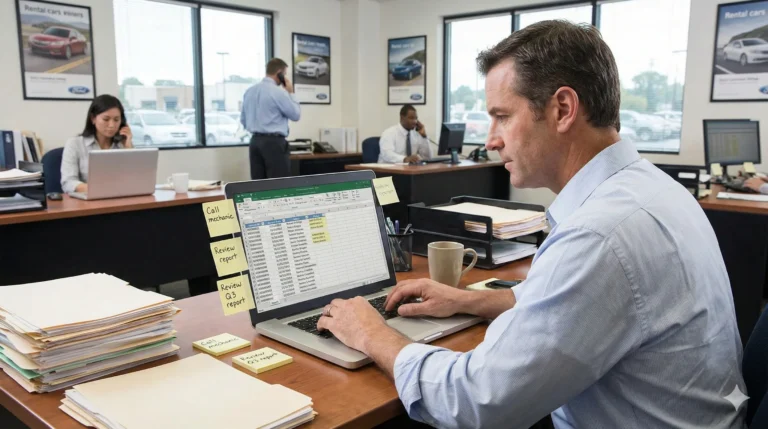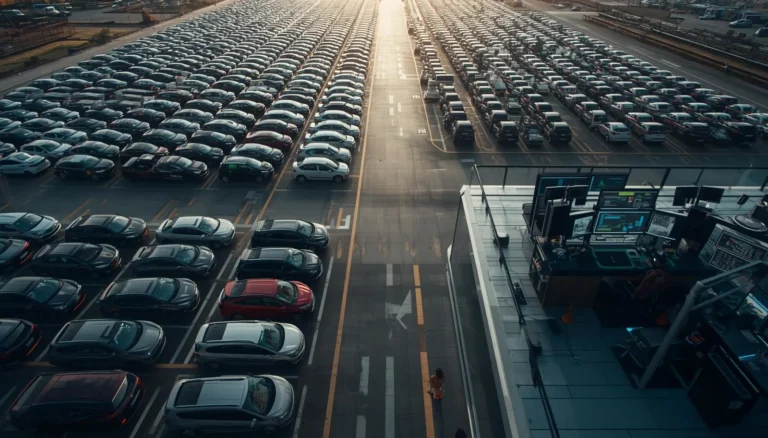

Manual coordination increases operational overhead because it multiplies communication, approval layers, and correction cycles. As fleets grow, relying on phone calls, spreadsheets, and informal messaging creates invisible labor cost and decision delays. The key insight is that overhead growth is structural, not merely a result of increasing headcount. The more vehicles in a fleet, the more complex the web of manual interactions becomes—resulting in friction, inefficiency, and ultimately, higher costs.
Communication Multiplies Without Structure
In most growing fleet companies, communication takes many forms: phone calls, WhatsApp groups, emails, and even face-to-face conversations. These channels often overlap, creating information silos and redundant exchanges. Urgent and routine requests intermingle, making it difficult to prioritize or track which issues require immediate action and which can wait. Consequently, escalation chains grow longer, as more team members are looped into discussions for clarity or approval.
Moreover, reconfirmation loops become rampant. A dispatcher may call a driver to confirm a pickup, then follow up with an operations manager for approval, and finally circle back to the client for reconfirmation. Each touchpoint adds to the communication density for every single vehicle. Notably, as fleet size increases, the volume of these interactions grows exponentially rather than linearly. This structural multiplication is the root cause of mounting operational overhead.
Driver & Allocation Rework
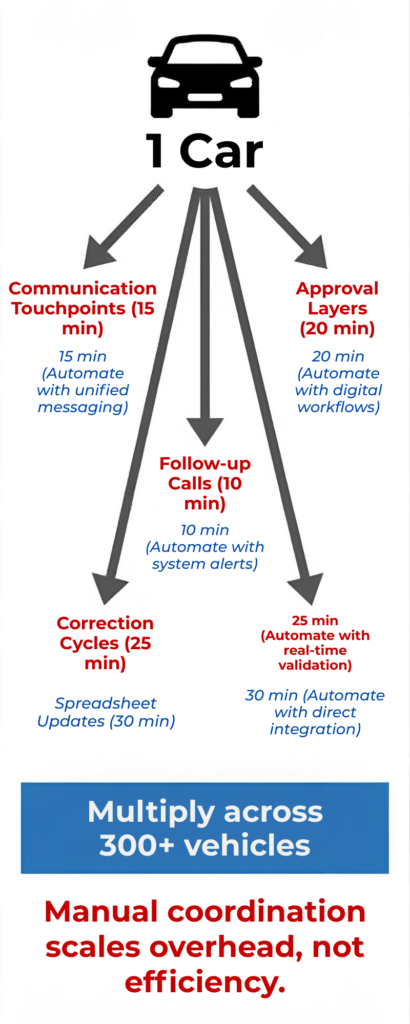
Manual coordination also leads to frequent driver and vehicle allocation errors. Without a centralized system, double assignments occur when two managers unknowingly schedule the same driver or vehicle for overlapping jobs. Manual availability checks, often conducted through calls or messaging, are prone to oversight and miscommunication.
Last-minute route changes further complicate coordination. When a client changes a destination or timing, operations teams scramble to inform drivers and adjust schedules. Replacement vehicle conflicts arise when a backup is assigned without full visibility into the current status or location of each asset. These correction cycles do not add value—they simply consume additional time and labor, increasing costs without enhancing output.
Ultimately, every layer of rework is a hidden drain on resources. Each mistake corrected manually is a symptom of systemic inefficiency rather than a one-off error.
Workshop & Approval Bottlenecks
The workshop and approval process is another area where manual coordination compounds overhead. Repair requests and quotations are typically handled via email or phone, requiring multiple rounds of approval. Status follow-ups with workshop teams become routine, with managers repeatedly checking whether repairs are completed or parts have arrived.
The absence of real-time visibility leads to confusion at various repair stages. Vehicles may sit idle because their status is unclear, or because the necessary approvals are delayed by informal communications. Idle vehicle oversight is a direct result of this lack of structure—assets remain unused, yet still incur costs.
Crucially, rework here does not contribute to improved output. Instead, it diverts attention and labor from productive activities, adding to overall operational overhead.
Financial Tracking Burden
Financial tracking in a manually coordinated environment is labor-intensive. Fuel and toll claims require careful verification—each receipt must be cross-checked, and discrepancies resolved through follow-up calls or emails. Incentive calculations for drivers grow more complex as the fleet expands, requiring multiple data sources and manual reconciliation.
Spreadsheet reconciliation across different departments becomes a time-consuming task, especially as the volume of transactions increases. Profit visibility lags, because financial data is scattered across various tools and formats, necessitating further consolidation before reports can be generated.
Therefore, dashboard automation emerges as a powerful overhead reduction lever. By centralizing financial tracking and automating calculations, companies can gain immediate visibility into key metrics, freeing up resources for higher-value activities.
The Structural Alternative
The antidote to manual coordination is a synchronized workflow—a structured process that integrates communication, task assignment, and visibility across all operational domains. This workflow typically follows five key stages:
- Classification: Every job, vehicle, and driver is accurately categorized and recorded, eliminating ambiguity.
- Allocation: Assignments are made centrally, with real-time visibility into asset availability, reducing double bookings.
- Workshop Tracking: Repairs and maintenance are tracked through a unified system, with status updates visible to all stakeholders.
- Cost Logging: All expenses, from fuel to repairs, are logged automatically, ensuring accuracy and timeliness.
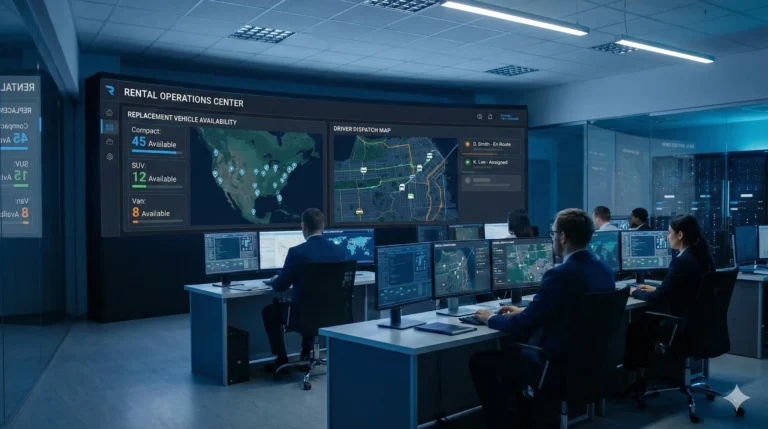
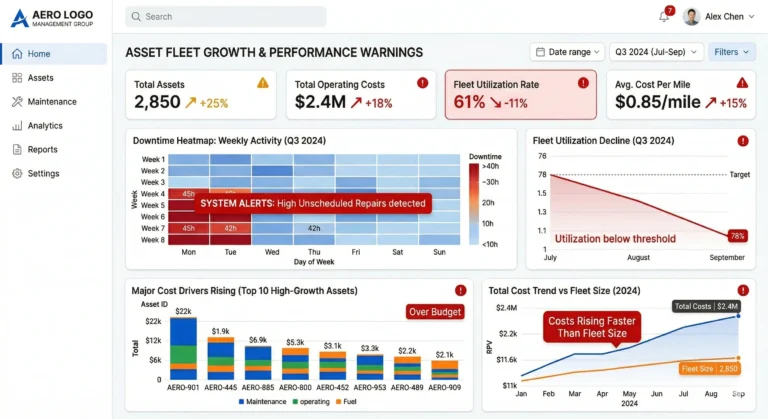
- Dashboard Visibility: Decision-makers access real-time dashboards that aggregate operational and financial data for immediate insight.
By automating these touchpoints, fleet companies reduce manual coordination dramatically. The result is fewer communication loops, faster approvals, and less rework—directly translating to lower operational overhead.
FAQ: Manual Coordination and Operational Overhead
Manual coordination introduces multiple communication layers, increases the risk of errors, and requires repeated follow-ups. Each additional step adds labor hours without necessarily improving output, thereby raising costs
Communication density grows exponentially as fleets expand. More vehicles mean more jobs, drivers, and stakeholders, resulting in a web of overlapping interactions that become increasingly difficult to manage manually.
While adding staff may temporarily relieve pressure, it does not address the structural inefficiencies of manual coordination. Ultimately, more people increase communication complexity and do not scale efficiently.
Common signs include frequent double bookings, delayed approvals, excessive phone calls or messages, untracked idle vehicles, and recurring correction cycles.
Spreadsheets require manual data entry, reconciliation, and validation. As data volume grows, so does the time spent managing spreadsheets, which creates additional labor cost and increases the likelihood of errors.
Conclusion
Manual coordination feels flexible. At scale, it becomes expensive. Operational overhead rises when communication replaces structure.
Therefore, as your fleet grows, scrutinize every layer of coordination. Invest in systems that eliminate redundant steps, centralize information, and empower your team. Reduce coordination layers. Reduce cost. Ultimately, building scalable processes today sets the foundation for tomorrow’s competitive advantage.