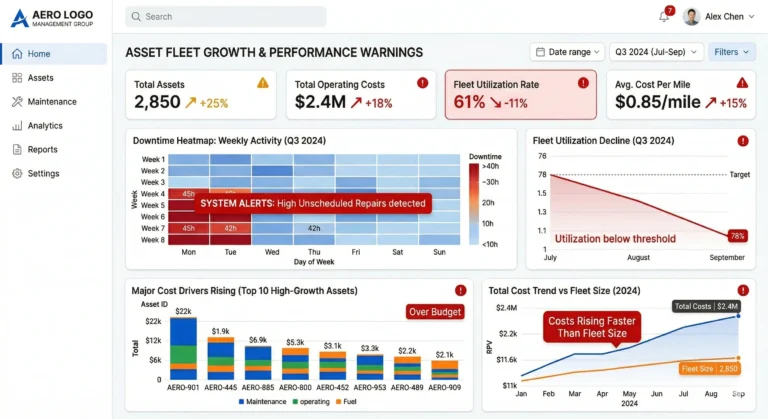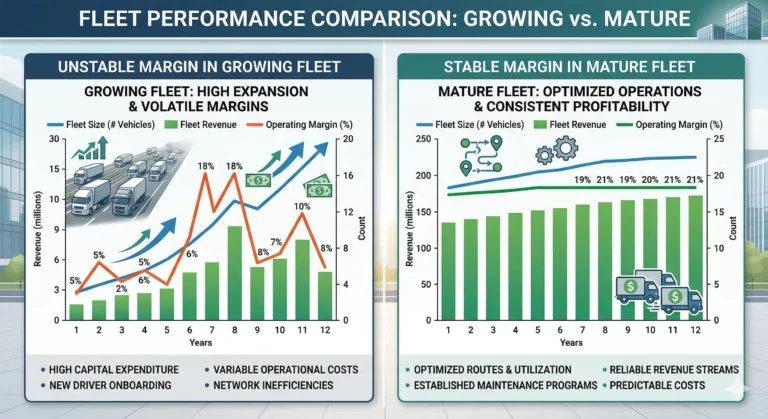
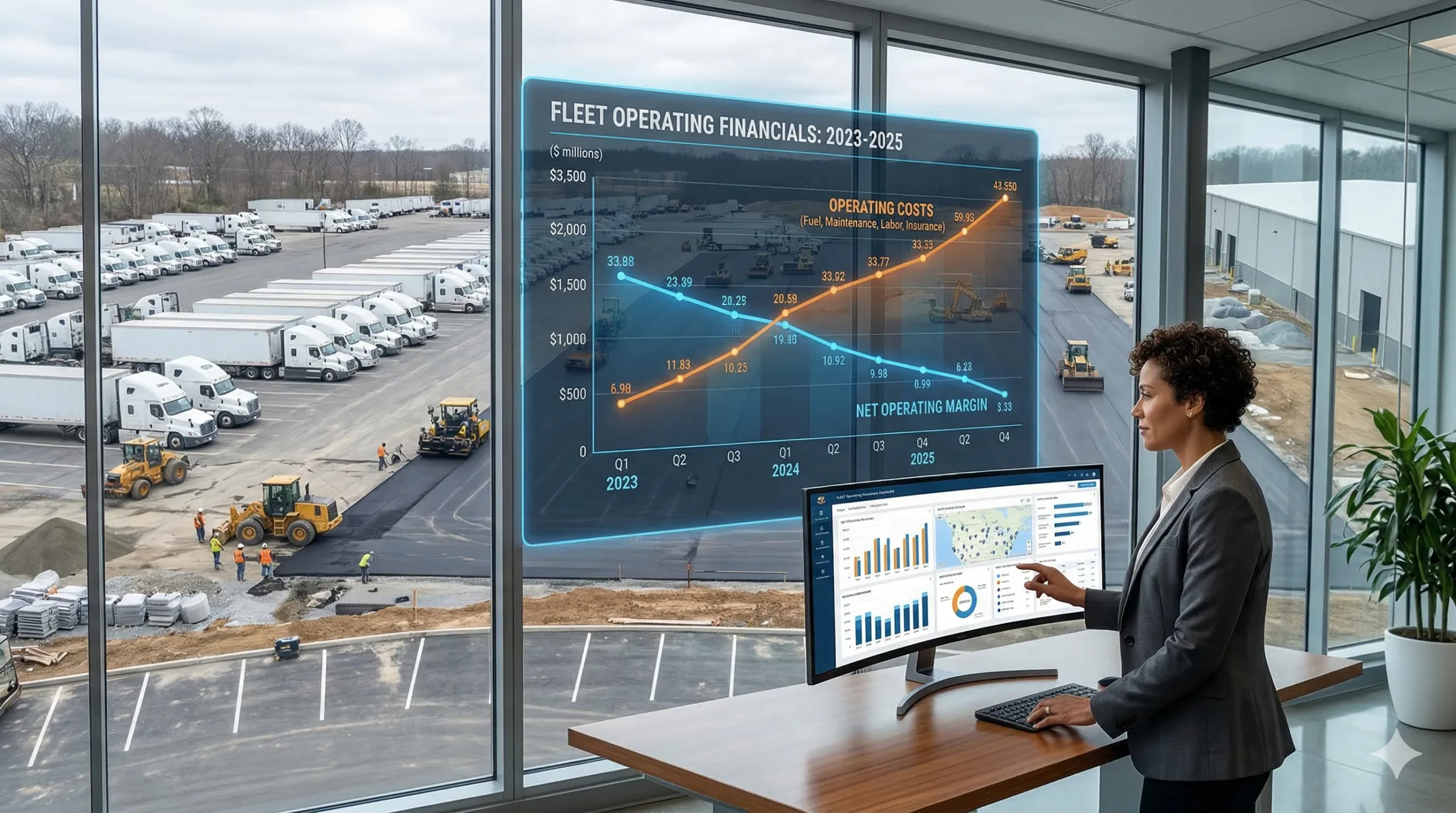
Revenue leakage in scaling fleets is rarely dramatic; instead, it accumulates silently as coordination complexity increases. As fleet size grows, minor inefficiencies compound, and profitability erodes without visible warning signs. For fleet owners, COOs, CFOs, and operations directors, the true threat lies not in isolated operational failures but in the systematic amplification of hidden structural weaknesses. Every additional vehicle, route, and workshop interaction becomes a new opportunity for value to slip away unnoticed. As expansion accelerates, the risk of silent margin erosion—rarely flagged in legacy systems—quickly multiplies.
How Scaling Multiplies Leakage Points
As a fleet expands, the very process of growth introduces multiple points of revenue leakage. Each new vehicle increases the number of service cycles, creating more frequent and complex maintenance schedules. Simultaneously, the probability of accidents and unscheduled repairs escalates. As the number of vehicles rises, so does the demand for timely replacements and the complexity of dispatch logistics.
More vehicles necessitate a larger administrative workload—each touchpoint from intake to final logging can become a leakage source. For example, consider the intake process: minor misclassifications or delays in registering vehicles cascade through the entire workflow, causing misaligned allocations and scheduling conflicts. Traffic allocation, too, becomes more intricate as routes overlap and driver assignments tangle. Without a robust system, dispatchers are forced to rely on manual tracking, which inevitably leads to errors and the missed opportunity for revenue.
In effect, every operational touchpoint—intake, traffic allocation, workshop lifecycle, replacement planning, financial logging, and dashboard reporting—serves as a potential exit point for revenue if left unsynchronized. The larger the fleet, the more these vulnerabilities are exposed and amplified.
Idle Days: The Silent Revenue Drain
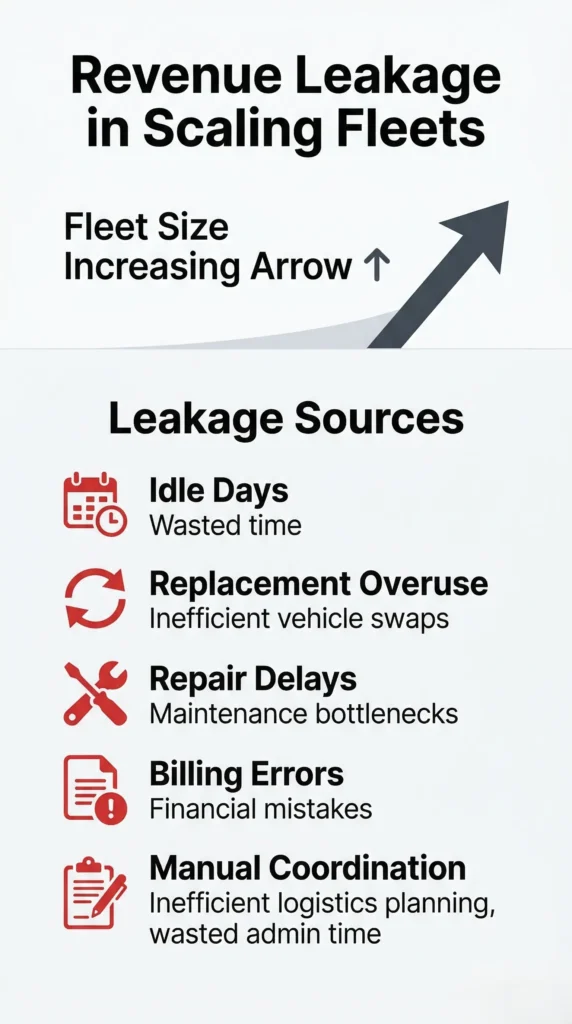
Idle days represent one of the most significant, yet overlooked, drivers of revenue leakage in scaling fleets. Vehicles are often returned but not immediately redeployed due to allocation visibility gaps or inefficient workshop scheduling. Service overlap further complicates matters, as vehicles queued for maintenance may sit idle while awaiting parts, authorization, or workshop space.
Replacement inefficiency is another hidden culprit. When vehicles are temporarily substituted, the process is frequently mismanaged—either replacement vehicles are unavailable, or premium units are used for mundane routes, reducing both utilization and potential revenue.
At the core, each lost idle day per vehicle does not simply translate to a one-off revenue dip. At scale, the impact becomes exponential. For instance, a 100-vehicle fleet losing one idle day per vehicle each month results in over three months of aggregate lost utilization annually. This compounding effect, if left unchecked, can quietly destabilize fleet profitability.
Utilization, therefore, is not just a metric—it’s the stabilizer of revenue. High utilization rates directly buffer against both predictable and unforeseen losses, underscoring the urgent need for real-time allocation visibility and proactive redeployment protocols.
Replacement Mismanagement & Dual Revenue Loss
Replacement planning, when mishandled, introduces dual revenue loss—idle primary vehicles and overused replacements. Off-road vehicles that are not accurately forecasted for downtime result in a lack of ready replacements. This forces operations to either delay assignments or misallocate higher-value vehicles, such as premium or specialized units, to fill routine gaps.
Moreover, when the duration of replacements goes unmonitored, replacement vehicles—often in peak demand—remain tied up in non-core roles. Simultaneously, the original vehicle’s repair or readiness status may be delayed due to poor workshop tracking or communication gaps.
This double impact—loss of revenue from both the idle primary asset and the suboptimally deployed replacement—quickly compounds as the fleet expands. For every day a vehicle remains off-road and its replacement is inefficiently allocated, the opportunity for revenue capture is diminished twice over. Only through precise forecasting, integrated workshop management, and real-time replacement tracking can this dual loss be contained.
Billing Delays & Cost Visibility Gaps
Financial blind spots frequently emerge during fleet expansion—often with severe consequences. Manual invoicing introduces errors, ranging from misapplied rates to incomplete billing cycles. These errors are amplified when repair costs are logged with delays, distorting true cost-per-mile and undercutting margin analysis.
Untracked incentives, such as driver bonuses or performance-linked perks, are another source of leakage. When these are not accurately logged and reconciled, both overpayment and under-incentivization threaten operational stability. Fuel and toll reconciliation gaps further muddy the financial picture, as discrepancies accumulate across a larger number of vehicles and routes.
The result is a dangerous expansion risk multiplier: as the fleet grows, so do the blind spots. Without real-time, unified cost visibility, financial reporting lags behind operational reality, making strategic course corrections nearly impossible.
Centralized Control as Leakage Prevention
The antidote to revenue leakage in scaling fleets is the synchronization of all core processes through a centralized, data-driven platform. Structured solutions, built around the unique workflow of modern fleets, enable real-time control and transparency at every stage:
- Automated Intake Classification: Vehicles are registered and categorized instantly, preventing misallocation from the outset.
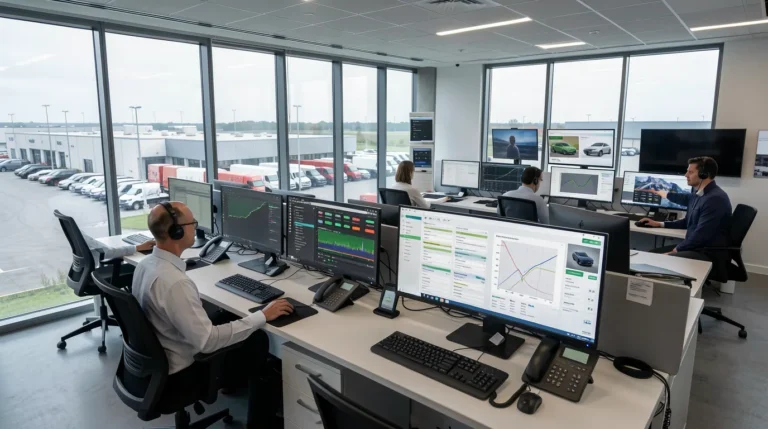
- Live Allocation Visibility: Real-time dashboards ensure dispatchers and operations managers always know vehicle status, location, and availability.
- Workshop Stage Tracking: Every phase of the workshop lifecycle—from intake to completion—is monitored, eliminating service overlap and reducing idle time.
- Replacement Forecasting: Integrated planning tools predict off-road events and secure replacements, minimizing operational disruption.
- Real-Time Cost Logging: All expenses, from repairs to incentives, are captured and reconciled as they occur, closing financial gaps.
- Unified Profit Dashboard: Comprehensive analytics transform raw data into actionable insights, empowering leadership to spot and address leakage before it compounds.
By implementing such centralized control, scaling fleets transition from reactive troubleshooting to proactive revenue protection. Synchronization across intake, allocation, workshop, replacement planning, and financial logging not only prevents leakage, it creates a foundation for sustainable, profitable growth.
FAQ: Revenue Leakage in Scaling Fleets
Revenue leakage in scaling fleets refers to the cumulative loss of potential revenue due to operational inefficiencies, mismanagement of assets, and financial blind spots that emerge as fleet size and complexity increase.
Expansion introduces more vehicles, routes, and administrative processes, each creating additional points where revenue can be lost through idle time, misallocation, or delayed financial reconciliation.
Idle days represent vehicles that are not generating revenue. At scale, even a single extra idle day per vehicle can exponentially erode profitability across the entire fleet.
Effective replacement planning ensures that off-road vehicles are promptly and efficiently substituted, minimizing dual losses from both idle assets and suboptimized replacements.
Key performance indicators include idle day ratio, maintenance turnaround time, replacement utilization rate, invoice processing time, and cost-per-mile accuracy.

Conclusion
Revenue leakage in scaling fleets is a structural coordination issue amplified by growth. Fleet companies that integrate intake, allocation, workshop, replacement, and finance into one synchronized system prevent margin erosion and scale sustainably. Control coordination. Protect revenue. Then expand.